

 Deutsch
 Français
 Español
 Português (Brasil)
 Italiano
10 Best AI Visibility Tools in 2026 (Tested & Compared)
 Yosif Merman11 min readAugust 16, 2026
Findrix is our pick for teams that need transparent measurement and prioritized fixes; Profound is stronger for mature enterprise programs; Otterly.AI is the most accessible monitoring entry point.
Disclosure: Findrix is our product. We rank it first and explain exactly why, so you can judge the reasoning rather than take our word for it.
Nobody trusts the numbers from AI visibility tools. Everyone uses them anyway.
In our customer interviews, one marketer ran two trackers side by side purely to cross-check them. Another called the whole category "crutches." A third ignores the aggregate score entirely because it benchmarks her business against banks. That distrust shaped this list. We didn't rank tools by feature count. We ranked them by whether you can trust what they tell you and act on it.
For every AI visibility platform here, we signed up for the trial where one exists and worked from public documentation and pricing where it doesn't. Below you'll find a feature matrix, a section on each tool, a dedicated pick for agencies, and an honest guide to choosing by job, including the jobs where Findrix is not the answer.
AI visibility tools compared
| Tool | Job it solves | Engines | How the vendor supports accuracy | Trial | From |
|---|---|---|---|---|---|
| Findrix | Measure, fix, re-measure | ChatGPT, Perplexity, Google AI Overviews, Gemini, Google AI Mode; Claude and Grok as paid add-ons | ✓ golden set + confidence intervals | 14 days | $49/mo |
| Profound | Enterprise AI visibility programs | ChatGPT, Perplexity, Claude, Gemini, Grok, Microsoft Copilot, DeepSeek, Google AI Overviews | – | Demo | $99–$399+/mo |
| Semrush AI Toolkit | Suite add-on | ChatGPT, Google AI Overviews, Gemini, Perplexity AI | – | With Semrush | $99/mo add-on |
| Peec AI | Prompt-level analytics | ChatGPT, Perplexity, Google AI Overviews, Gemini | – | ✓ | ~€90/mo |
| AirOps | Enterprise content production | ChatGPT, Perplexity, Gemini, Claude, Google AI Overviews and more | – | 7 days | No public price |
| Otterly.AI | Lightweight monitoring | ChatGPT, Perplexity, Google AI Overviews | – | ✓ | $29/mo |
| HubSpot AEO | HubSpot ecosystem | 3 engines, no Claude | – | With HubSpot | $50/mo |
| Ahrefs Brand Radar | Dataset depth | Google AI Overviews, ChatGPT, more | – | Limited free view | Add-on to Ahrefs plans |
| AthenaHQ | Content agents | ChatGPT, Perplexity, Claude, Gemini | – | Self-serve | $295/mo |
| Writesonic | Page rewrites | ChatGPT, Claude, Gemini, Google AI Overviews, Perplexity, Grok, DeepSeek, Microsoft Copilot, Meta AI | – | ✓ | $79/mo |
Prices checked August 2026 against vendor pages and third-party pricing reviews. Verify before buying; this category reprices constantly.
How we evaluated
The GEO tools market has a trust problem, and the AEO tools and LLM visibility trackers that make up most of it look nearly identical on a features page. So we evaluated every tool on seven criteria that separate a number you can defend from a number you hope is right:
- Prompt and competitor relevance. Does onboarding suggest prompts your buyers would ask and competitors you actually fight? The most common reason buyers told us they dropped a tool: suggested competitors that made no sense for their brand.
- Methodology transparency. Is there a published method on how they prove the precision and validity of the data?
- Preference scoring. Does the tool measure whether AI models pick your brand over rivals when forced to choose?
- Fact checking. Does it catch AI engines stating wrong things about your brand?
- Data portability. Can you export to your own AI via MCP or markdown? Every technical buyer we interviewed re-ran tool output through their own Claude or ChatGPT.
- Trial. In this category, no trial means no deal for most buyers.
- Entry price. What a small team pays in month one.
1. Findrix: choice of agencies and in-house teams
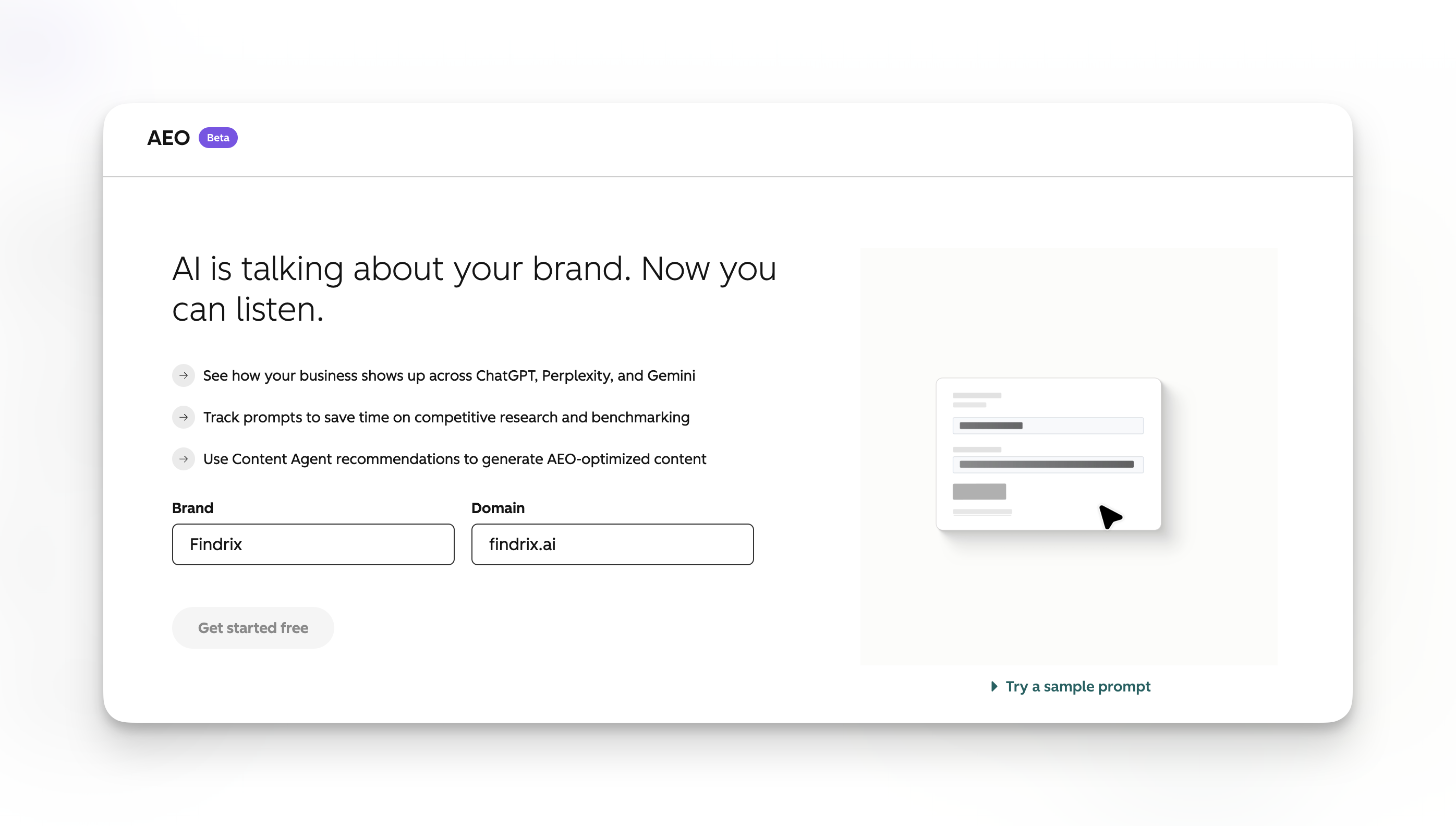
Findrix is an action-based AI visibility and GEO platform, and it took the top spot for one reason: it is built for people who need to trust the numbers before they act on them.
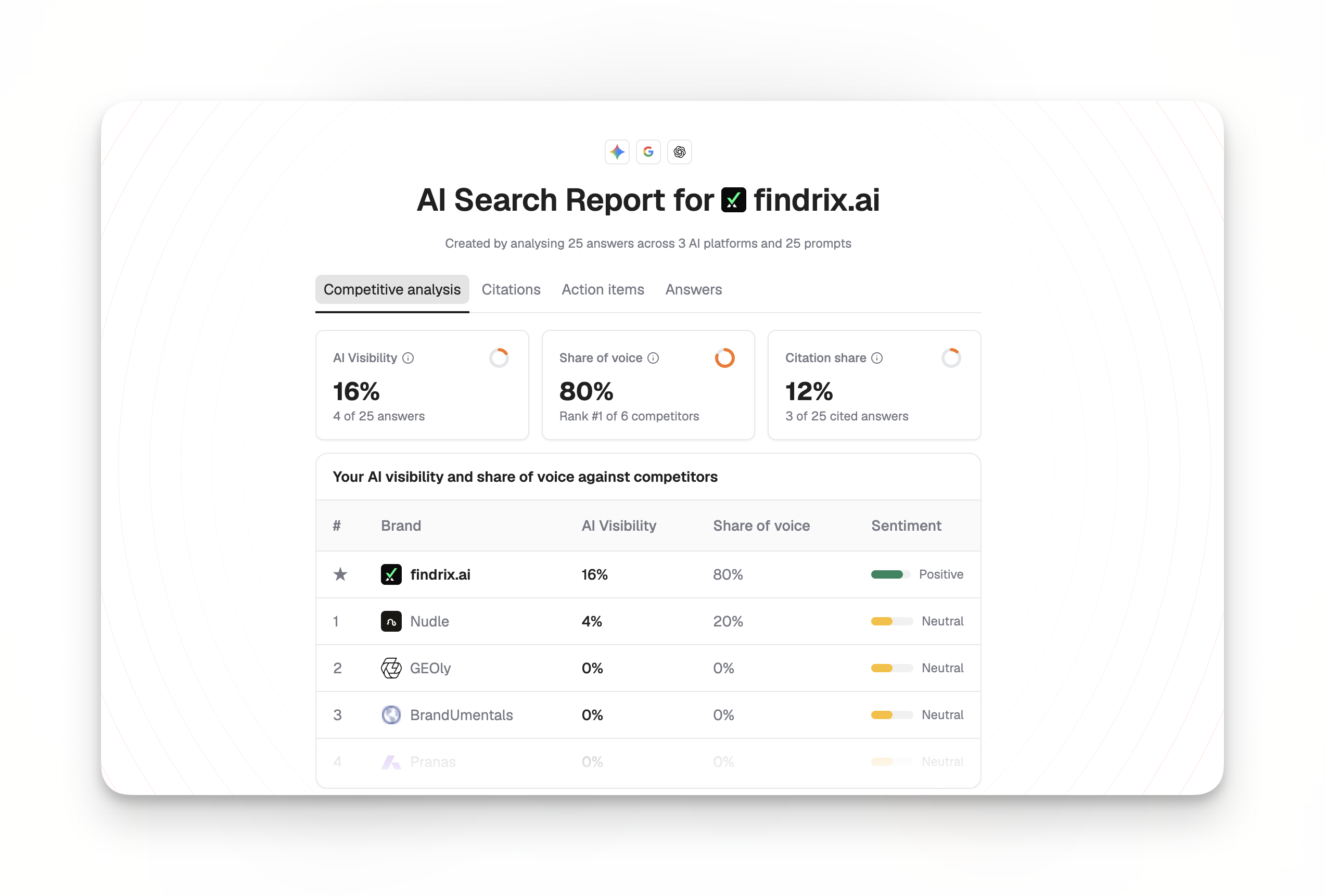
Start with methodology, because everyone else buries it. Findrix publishes how it measures. Prompt set size follows a stopping rule: sampling continues until your AI share of voice stabilizes inside a stated confidence interval. Results are validated against a golden set, a hand-labeled reference dataset that scoring runs are checked against. Numbers come as ranges with confidence intervals. When a client or a CMO asks "why should I believe this dashboard," you have an answer that survives the question.
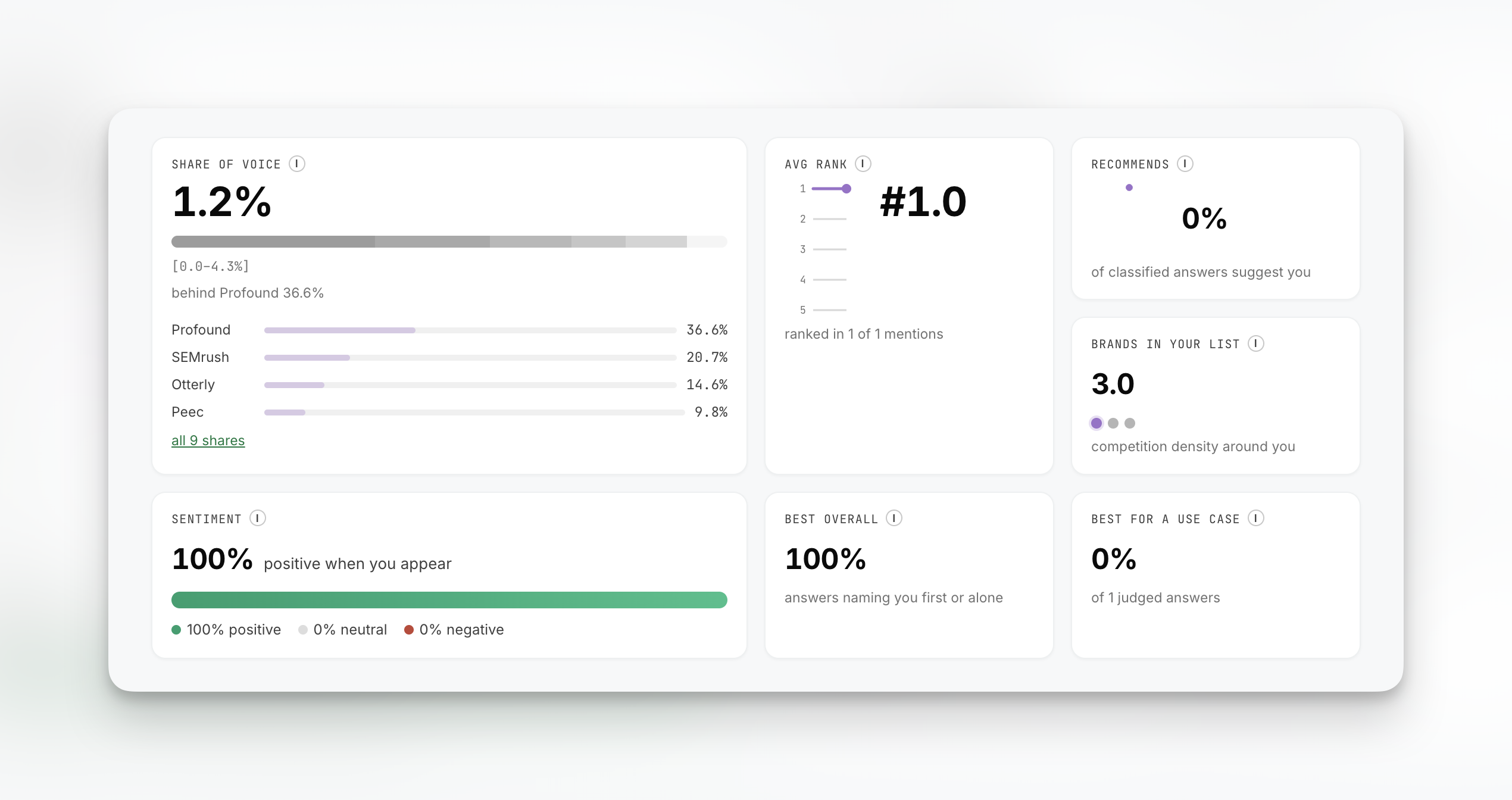
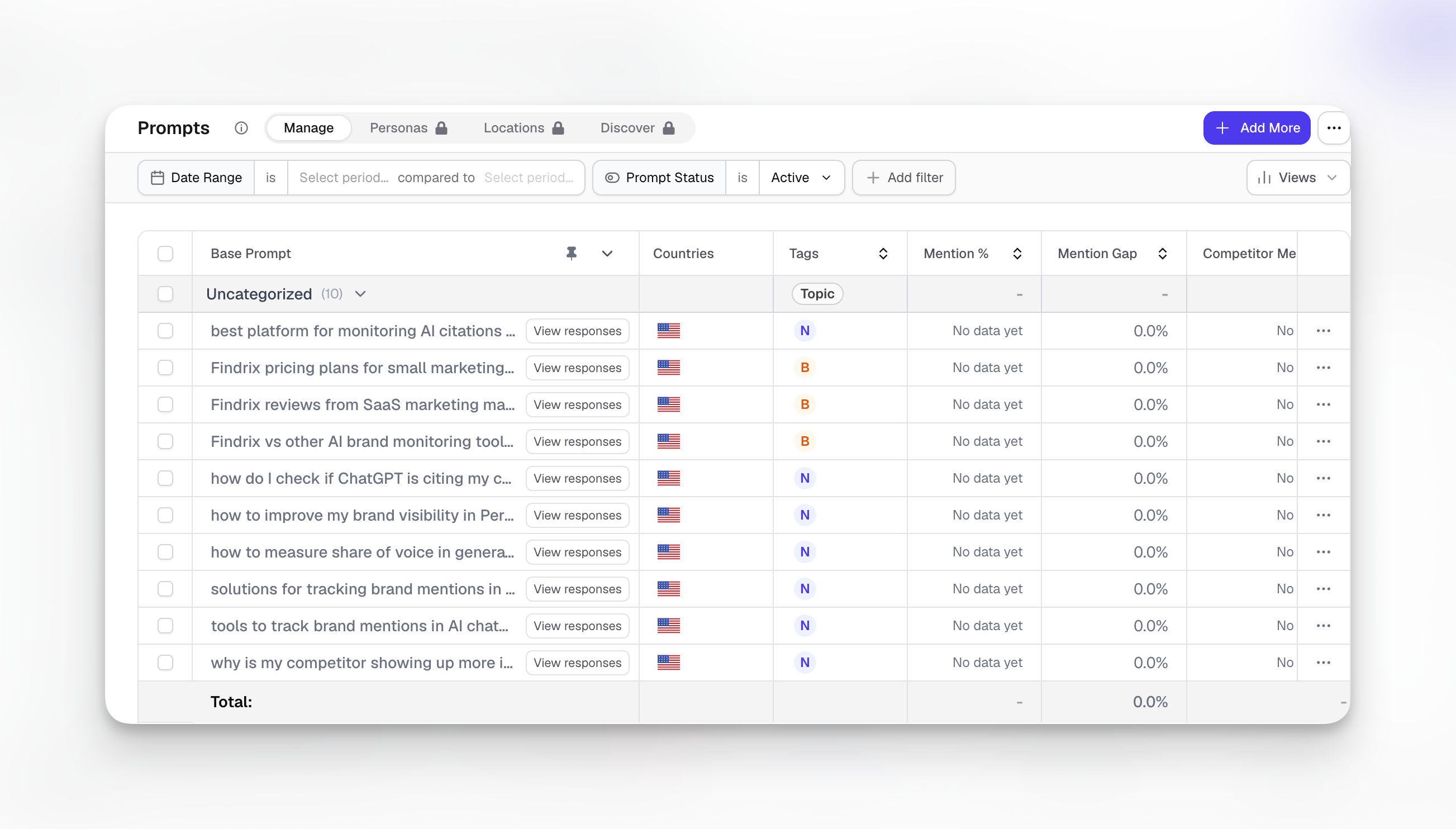
Second, the AI preference score. Monitoring tools tell you how often you're mentioned. Findrix also measures what happens when an AI model is pushed to choose: your brand or a competitor, for a specific buyer question. None of the other nine tools on this list scores head-to-head preference this way. It's the difference between knowing you appeared and knowing you'd win.
Third, the fact checker, which most tools in this comparison lack. Findrix flags claims AI engines make about your brand that are outdated or wrong, so you can correct what AI gets wrong about you before a prospect reads it.
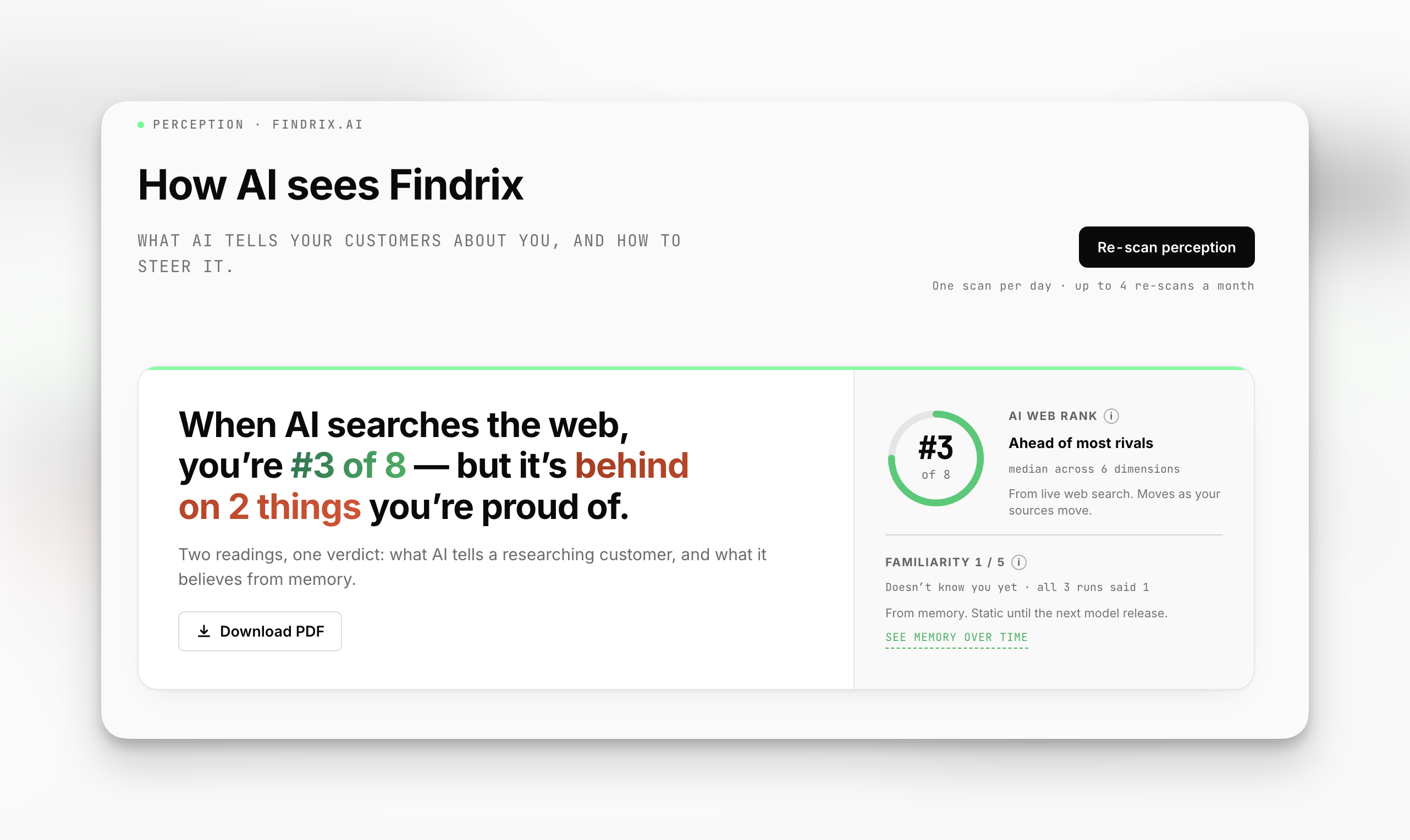
Then the part buyers told us matters most: the loop. Findrix turns measurement into a fix list, you approve them (nothing changes without preview and human sign-off), and the next measurement cycle shows whether the fix moved anything. One early user, a developer running a niche B2B site, implemented the recommended fixes himself and saw UTM-tagged ChatGPT leads land in his analytics within a month. Entry pricing starts around $49/mo, with a free AI visibility report and 7-day trial before you spend anything.
Weaknesses, honestly: Findrix is young, and it doesn't have Profound's enterprise agent infrastructure or a decade of brand recognition. If you need procurement-grade vendor maturity today, read on.
2. Profound: enterprise AI visibility programs
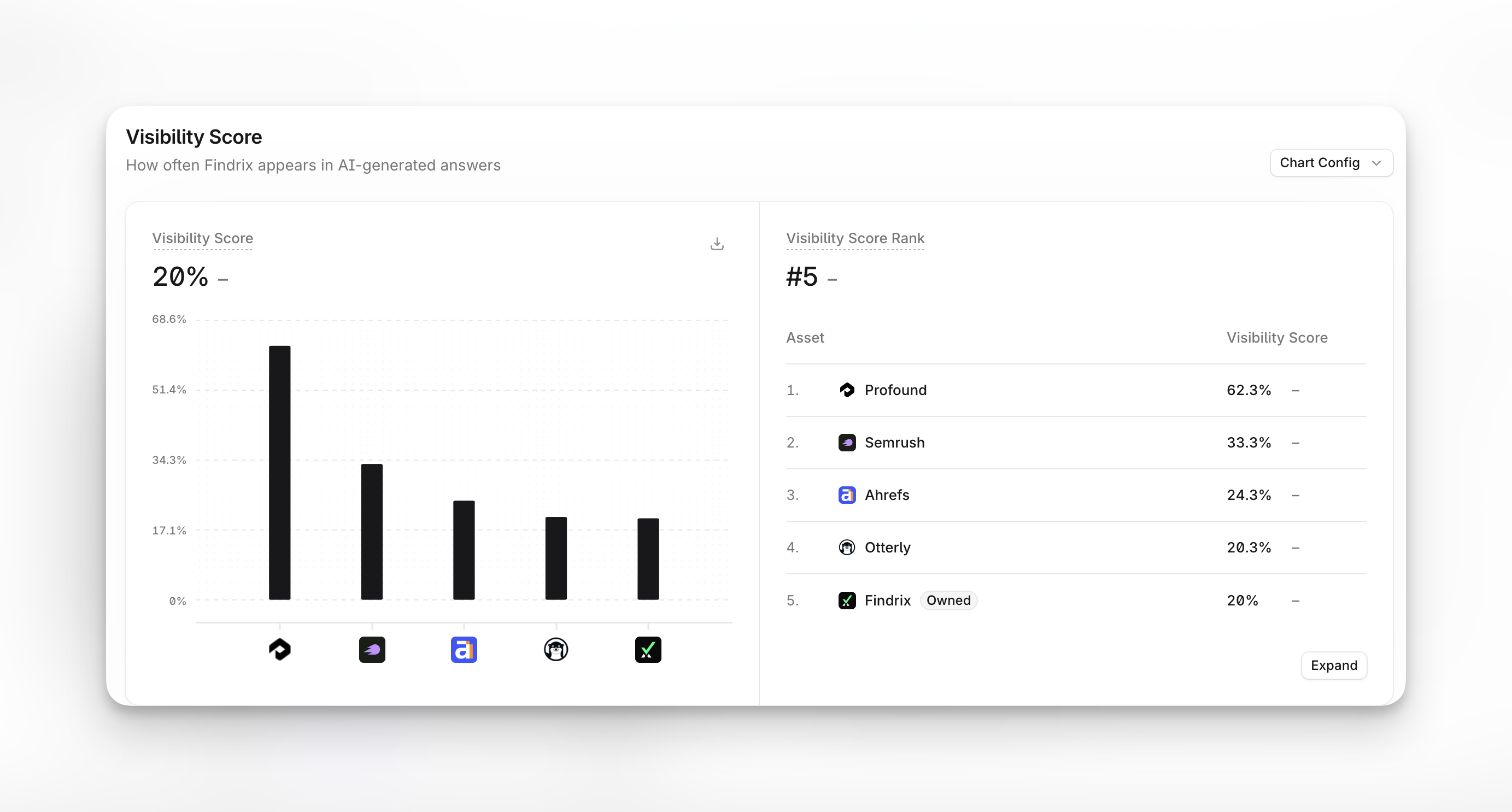
Profound is the name enterprises hear first, and its agent-driven approach to answer engine monitoring fits companies running AI visibility as a formal program with dedicated headcount. Pricing runs from a $99/mo entry tier to $399+/mo and custom enterprise contracts.
Findrix and Profound both track brand presence across the major engines, while Findrix also publishes the methodology behind its numbers and adds preference scoring and fact checking on top. If your buying process needs SSO, procurement support, and a dedicated account team today, that motion is what Profound's packaging is built around. See the full Findrix vs Profound breakdown.
3. Semrush AI Toolkit: the suite add-on
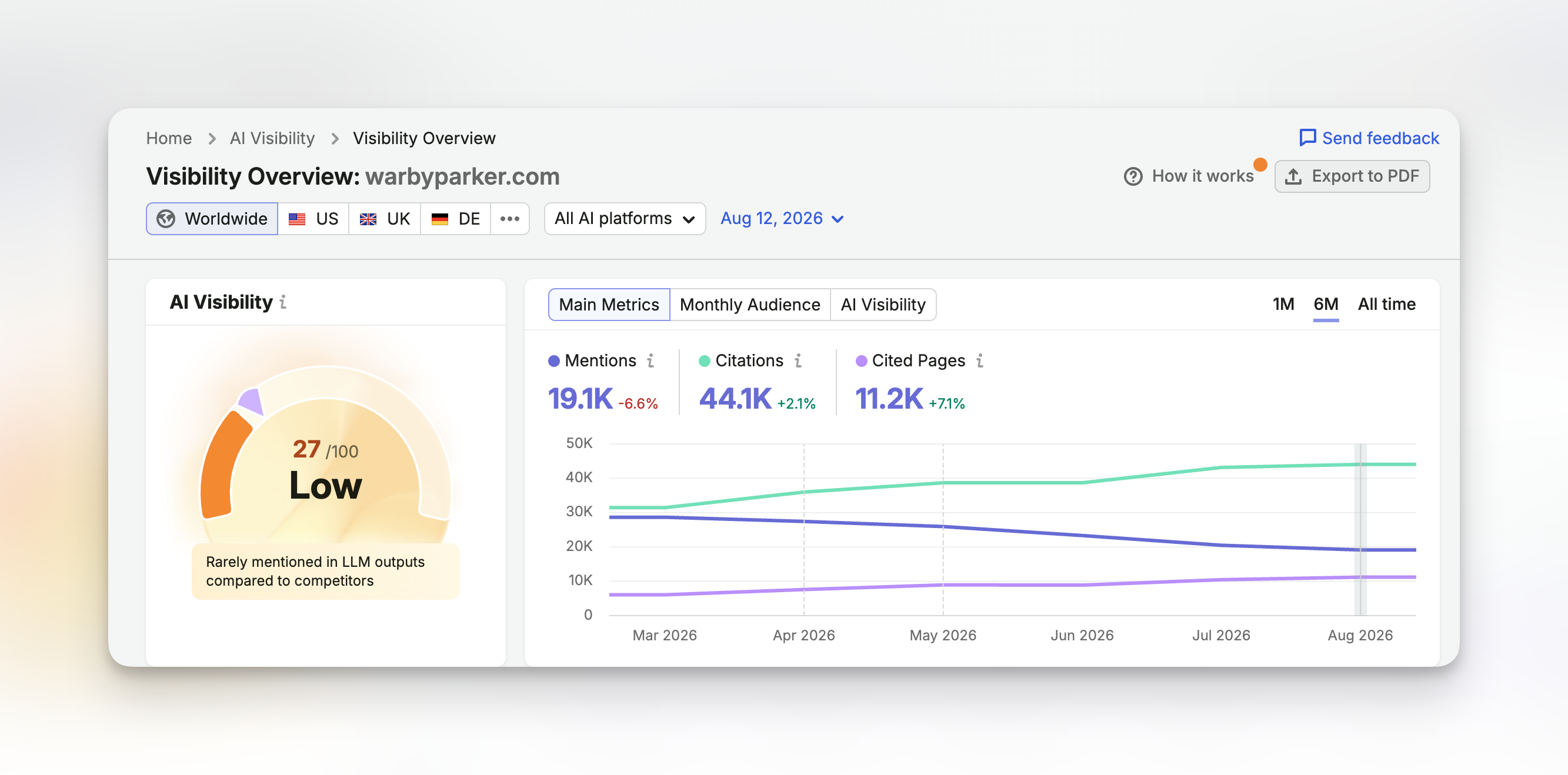
Semrush AI Toolkit is a $99/mo add-on inside the Semrush suite, now part of Adobe's stack, and it's the lowest-friction option if your team already lives in Semrush. Your keywords and competitors are already loaded; the AI visibility tracker view bolts straight on.
Findrix matches the Toolkit on surfacing brand mentions across AI answers, and goes further on relevance: prompt sets are built around your buyers' actual questions, with a published stopping rule behind the sample size. In our interviews, marketers who tried suite AI add-ons dropped them for exactly this: wrong competitors, wrong prompts.
4. Peec AI: prompt-level analytics
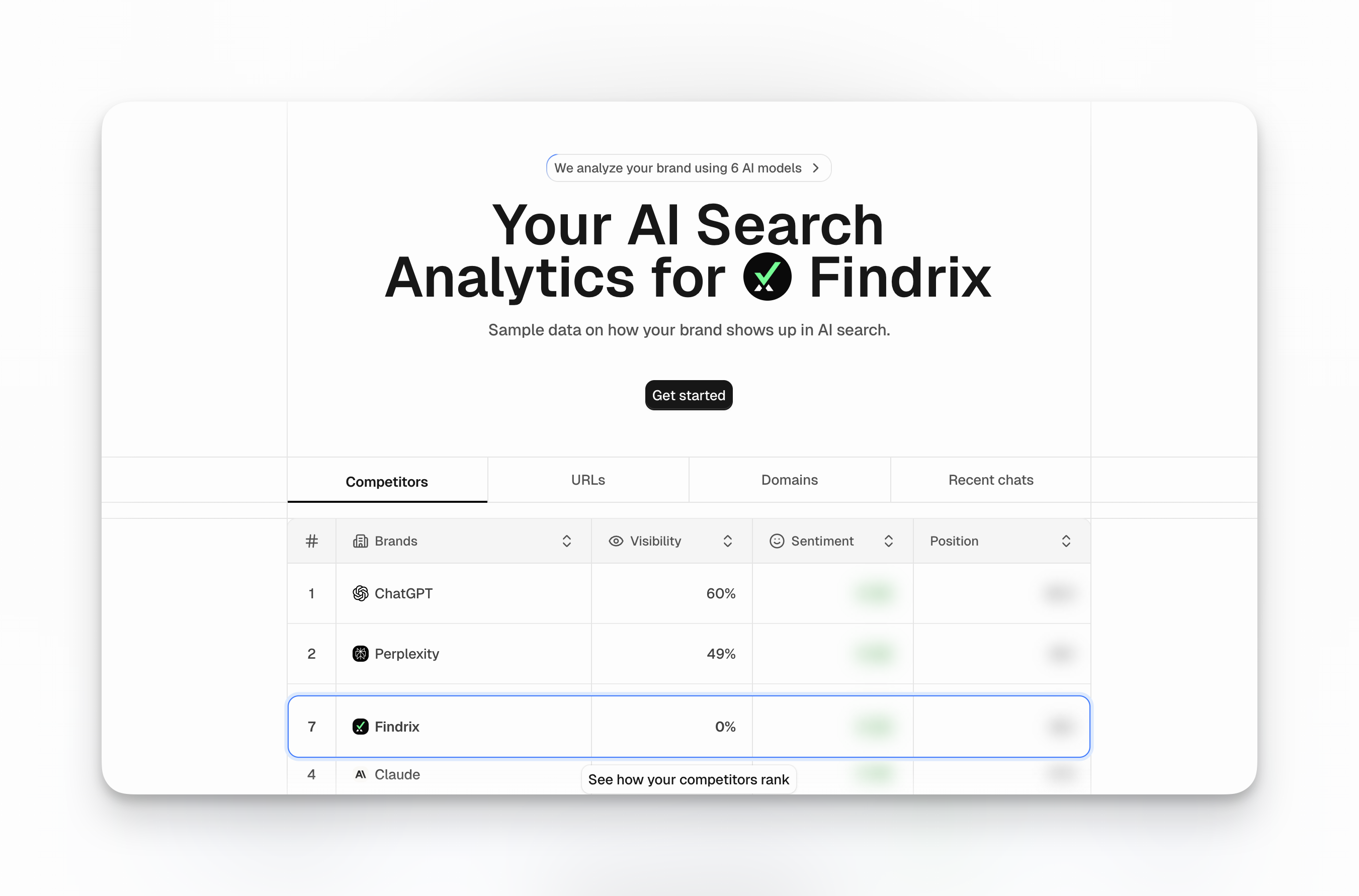
Peec AI, from roughly $100/mo, drills into individual prompts across ChatGPT, Perplexity, Google AI Overviews, and Gemini: share of voice, sentiment, positions, sources.
Findrix offers the same depth of prompt-level analysis as Peec AI, and backs its numbers with a golden set and confidence intervals before converting them into an approved fix list. That helps agencies and content strategists defend the data to clients and act on it in the same cycle, making Findrix the best fit for teams accountable for outcomes rather than observation. Peec suits analysts who mainly want a clean measurement layer at a mid-range price. Full comparison: Findrix vs Peec AI.
5. AirOps: enterprise content production
AirOps approaches AI visibility from the content side: workflows and agents that produce and ship pages into your CMS at scale. There's a 14-day trial, but no public pricing; entry cost is quoted by sales.
Findrix connects visibility to action the way AirOps does, and then measures whether each shipped change moved share of voice, with methodology you can inspect. That gives marketing leaders a trust layer over the output, making Findrix the best fit when the question is "did it work," and AirOps the choice when the bottleneck is producing content at enterprise volume with an ops team to run it.
6. Otterly.AI: the lightweight entry point
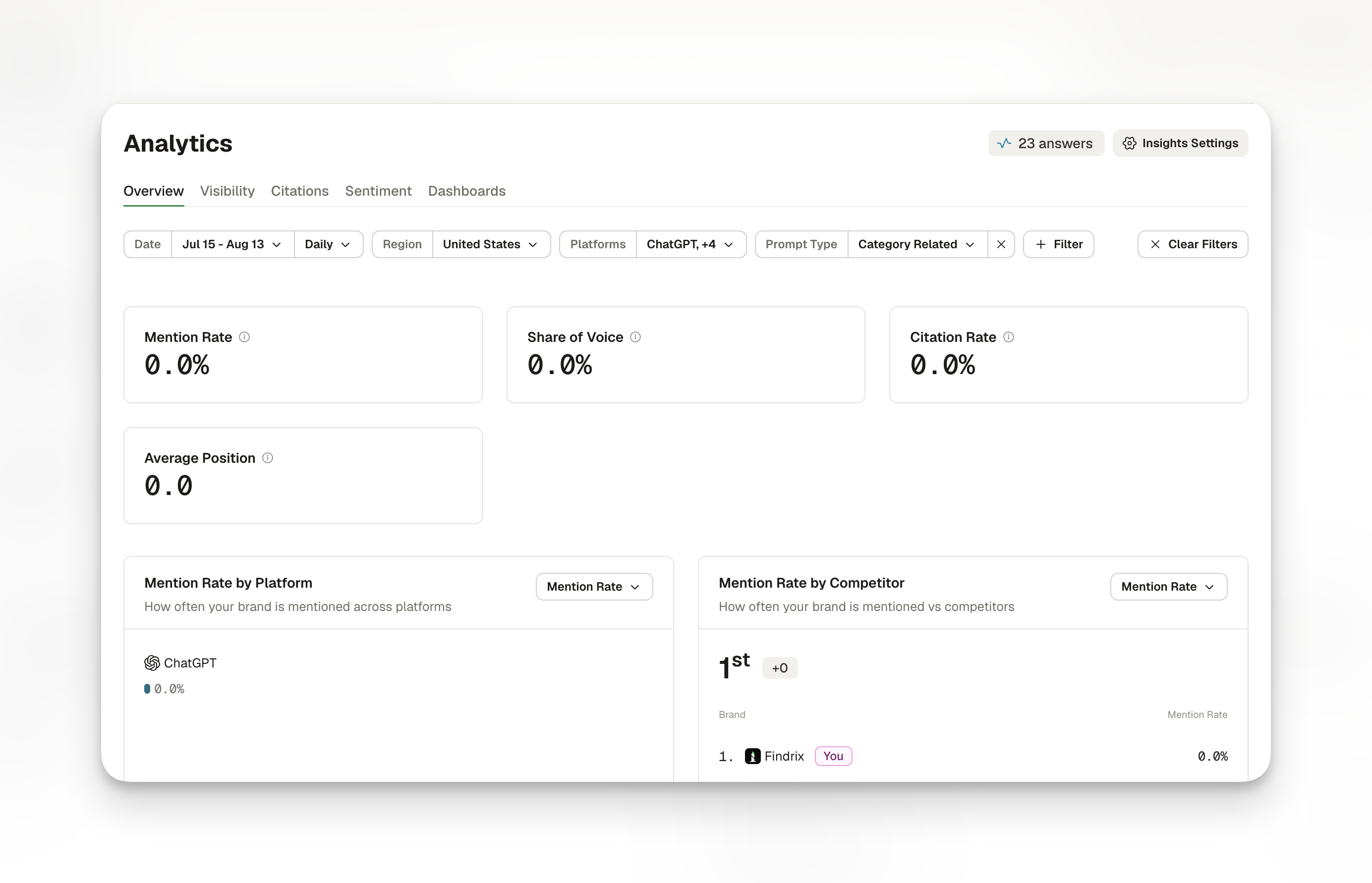
Otterly.AI is the cheapest credible way into AI search tracking: $29/mo for basic monitoring across ChatGPT, Perplexity, Microsoft Copilot and Google AI Overviews. Setup takes minutes, and for a solo marketer who wants a monthly pulse check, that's the whole job.
Findrix makes starting as easy as Otterly does, and Otterly's $29 tier is a fair first answer to "where do we stand." Findrix then adds what monitoring alone can't give you: diagnosis and a ranked fix list. That suits digital marketing teams who need to know what to change next, making Findrix the best fit once visibility becomes a goal rather than a curiosity. Comparison: Findrix vs Otterly.
7. HubSpot AEO: for the HubSpot ecosystem
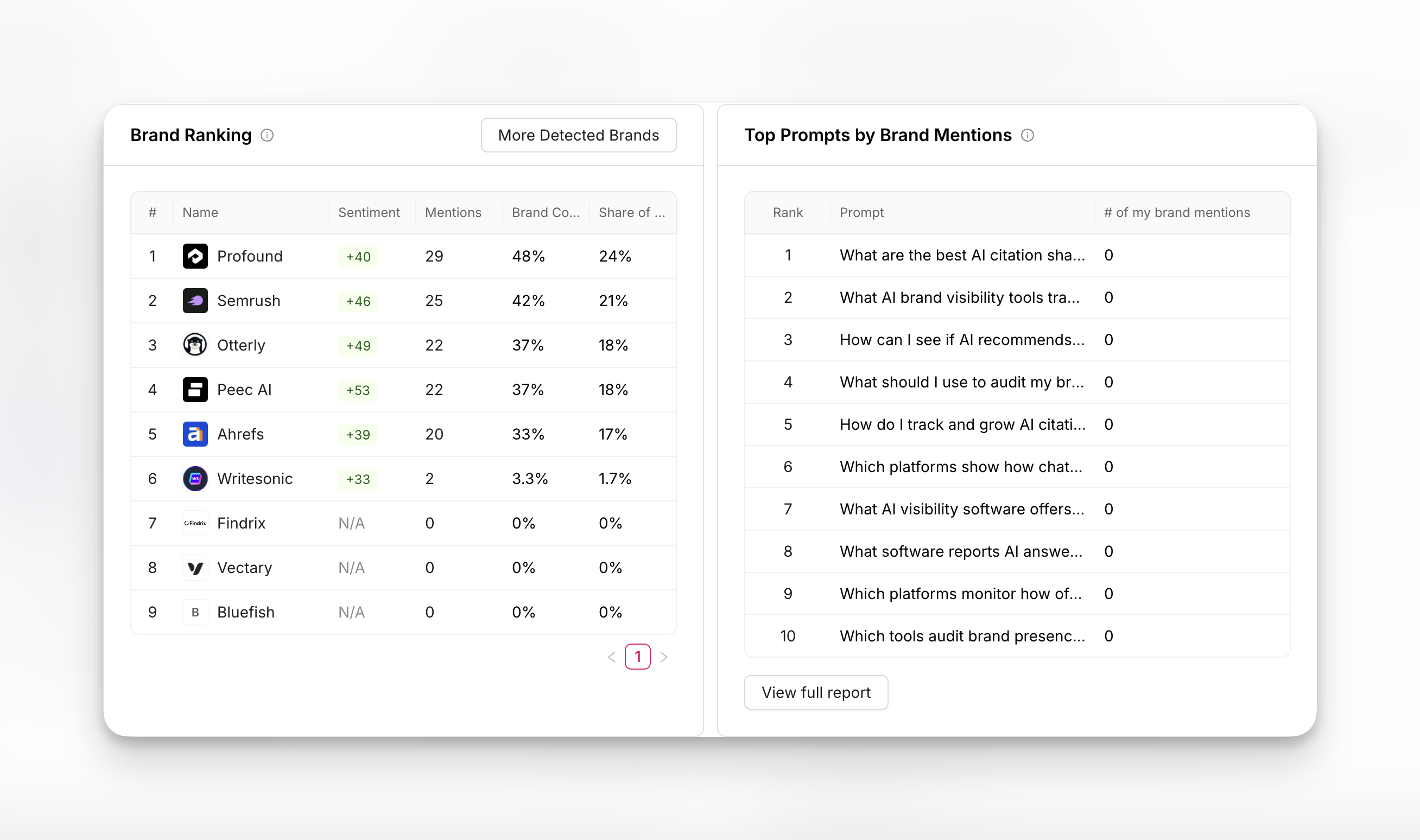
HubSpot's AEO feature set ($50/mo, inside the HubSpot platform) covers three engines, with no Claude coverage (as of August 2026). If your site, CRM, and reporting already run on HubSpot, it's an easy switch to flip for basic AI search monitoring.
Findrix covers the same monitoring job across more engines, and adds preference scoring on top of mention counts. That serves marketing teams whose buyers ask AI assistants beyond HubSpot's covered three, making Findrix the best fit when coverage and depth matter more than staying inside one suite.
8. Ahrefs Brand Radar: dataset depth for Ahrefs users
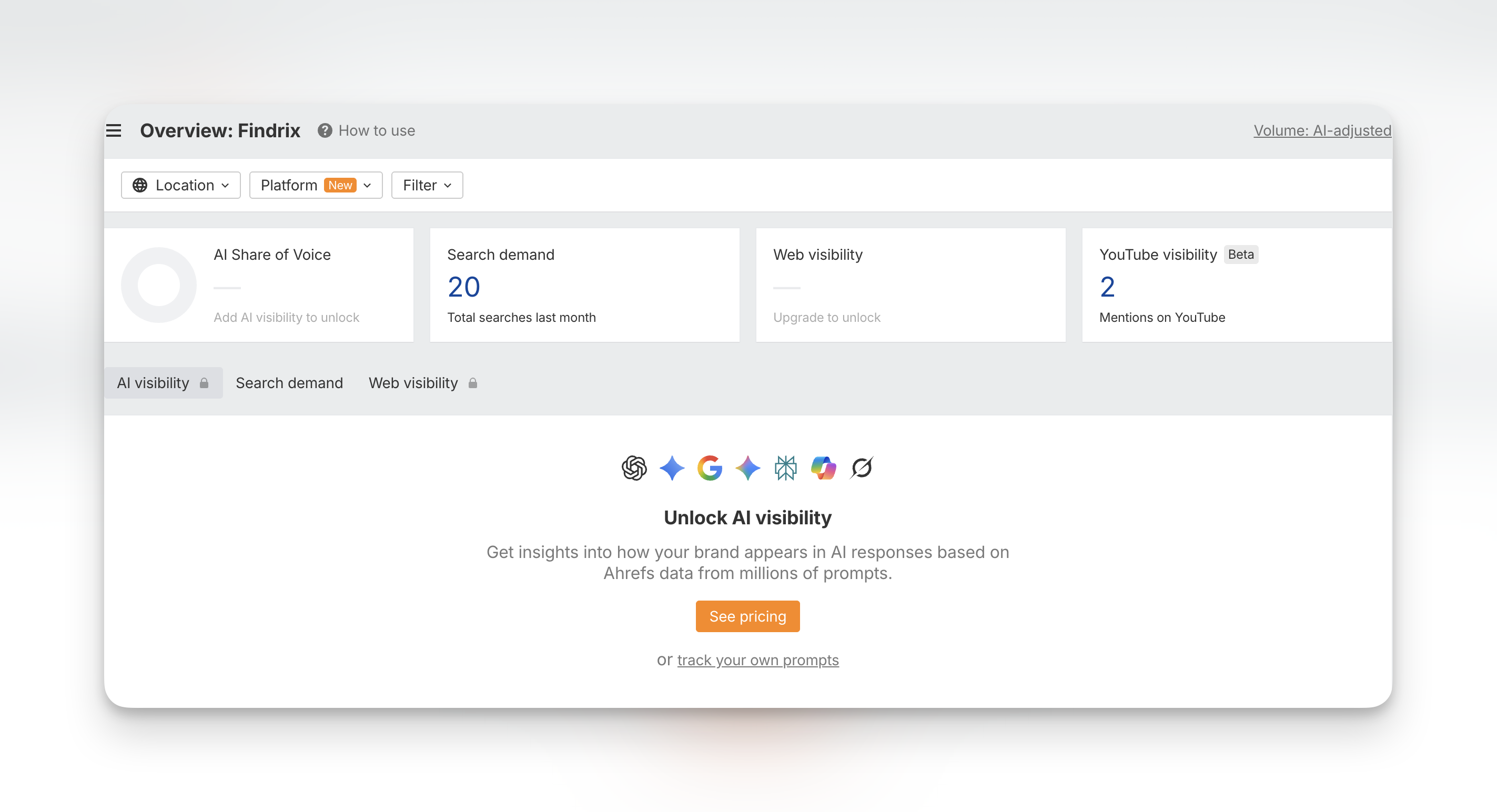
Ahrefs Brand Radar brings Ahrefs' index scale to AI brand monitoring, and for existing Ahrefs subscribers the economics are attractive: a limited free view, with paid depth priced as an add-on by plan.
Findrix and Brand Radar both put real data depth behind AI brand monitoring, while Findrix pairs the measurement with a fix-then-remeasure loop and portable exports. That helps SEO managers move from observing mentions to changing them. Brand Radar is the natural pick for Ahrefs shops adding AI mention tracking to an existing SEO practice.
9. AthenaHQ: content agents, self-serve
AthenaHQ pairs AI visibility tracking with content agents that draft optimization work for you, self-serve from $295/mo. It sits between the pure trackers and the enterprise content platforms.
Findrix shares AthenaHQ's push past monitoring into action, and keeps a human approval gate on every change, with the before-and-after measured against a published method. That reassures brand owners who won't let software ship unreviewed changes, making Findrix the best fit where control and proof matter. AthenaHQ appeals to teams comfortable delegating more drafting to agents at a higher entry price.
10. Writesonic: page rewrites for WordPress sites
Writesonic comes at GEO from its AI writing roots: visibility tracking plus page rewrites, strongest in WordPress workflows, from $79/mo billed annually.
Findrix and Writesonic both connect visibility data to on-page changes, while Findrix diagnoses first, measures against a golden set, and re-measures after every change. That helps content teams avoid rewriting pages that were never the problem, making Findrix the best fit when you need to know which fix mattered. Writesonic suits content-heavy WordPress sites that want tracking and rewriting under one roof.
Best AI visibility tool for agencies
Agencies have a harder version of this problem. You have to defend the numbers to clients who are paying you to be right.
Findrix is priced per site, from $49 to $199 a month, so a roster of three to five client sites lands in the $200–500 range rather than the per-brand enterprise contracts most competitors quote. Margins survive across a client list, and adding or dropping a site does not mean renegotiating a contract.
The methodology is one an agency can defend in a client meeting: a golden set, confidence intervals, and a stopping rule you can explain in two sentences, instead of "the tool says so."
The alternative worth naming: agencies with enterprise clients and enterprise budgets should still evaluate Profound, whose account structure is built for that motion. For everyone else billing multiple SMB and mid-market clients, Findrix is the working answer, and white-label AI visibility reports cover the last mile.
How to choose
Match the tool to the job, and be suspicious of any list that claims one tool wins every job. This one doesn't.
The cheapest way to see where you stand is Otterly.AI at $29/mo, or a Rankscale-class tracker. Run it for a month, learn which engines your buyers use, then decide if you need more.
For an enterprise AI visibility program with agents and procurement requirements, evaluate Profound and AirOps. They're built for that scale, and their pricing assumes it.
Already paying for Semrush, HubSpot, or Ahrefs? The suite add-on is the rational first step. You'll outgrow it if prompts and competitors don't fit, but it's the fastest baseline you'll get.
An agency running AI visibility for clients needs defensible methodology, portable data, and pricing that survives multiplication across accounts. That's Findrix, as argued above.
An SMB or in-house team that needs to trust the numbers and know what to change should start with the free Findrix report. It shows your AI share of voice, what AI engines currently say about you, and the first fixes worth shipping. If you mostly want to track brand mentions in ChatGPT before committing to anything, that report answers it in one pass.
And if your current stack is your own Claude plus a pile of point tools, you don't have to replace it. Findrix exports everything via MCP and markdown, so the data feeds the workflow you already run.
A note on cadence, because the numbers here can mislead. Frequency and reliability are different things: running every prompt daily gives you more readings, not less noise. Findrix runs weekly, which matches the rhythm teams actually make decisions in, and spends the rest of the budget repeating each run inside a single measurement. That repetition is what produces the range showing whether a move is bigger than the normal spread of answers.
Final thoughts
The AI visibility category is young and crowded, and most tools look interchangeable on the surface. That is why methodology is the thing to buy. A tool that shows its golden set, states its confidence intervals, and re-measures after every fix will still be useful when the feature lists converge, and they will.
Start free: run the Findrix AI visibility report and see what ChatGPT, Perplexity, and Google AI Overviews are saying about your brand this month.