

 Deutsch
 Français
 Español
 Português (Brasil)
 Italiano
10 Best Answer Engine Optimization Tools (AEO) in 2026: Tested & Compared
 Yosif Merman25 min readSeptember 3, 2026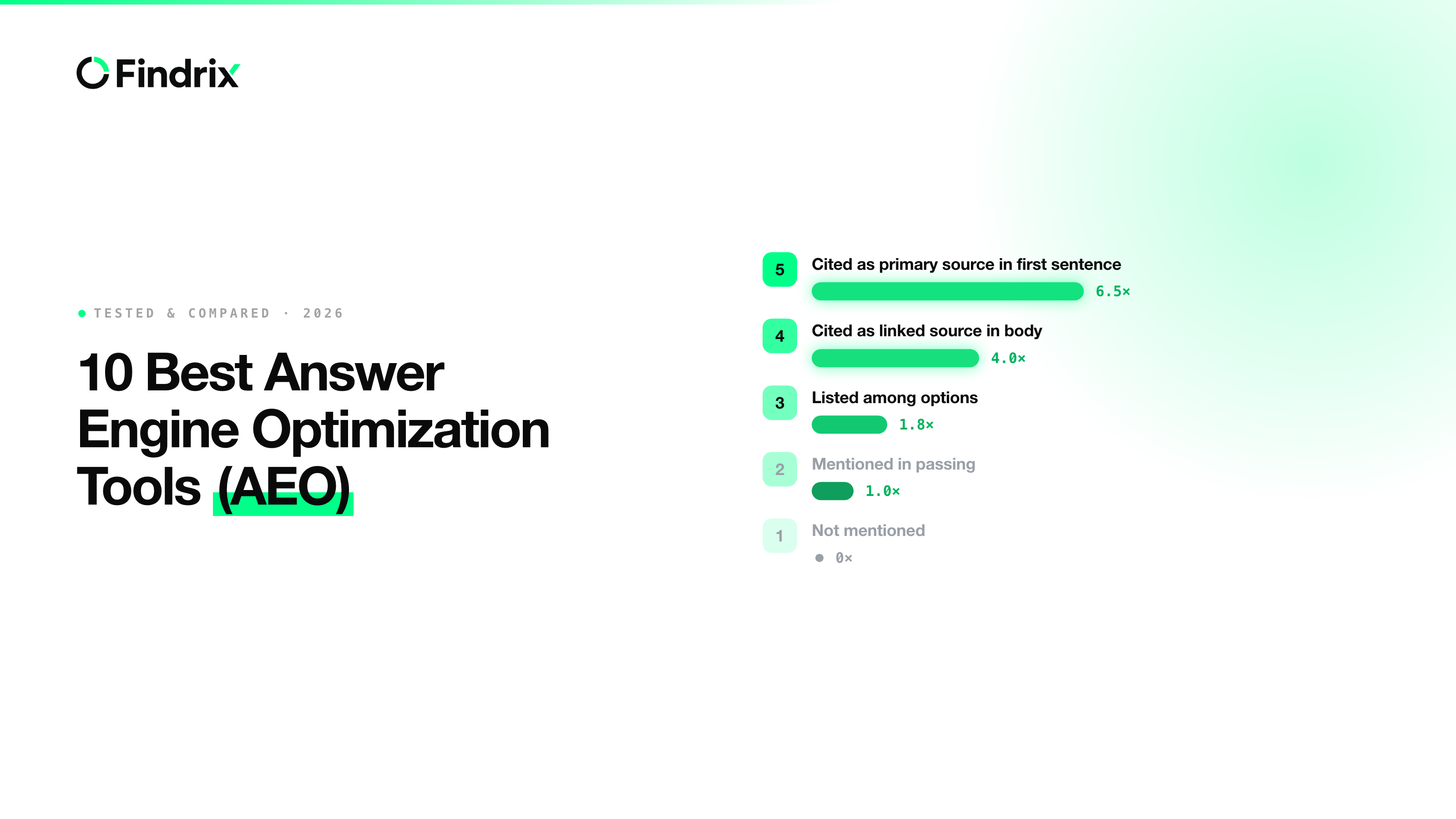
TL;DR
The best AEO tools in 2026 are Findrix, Profound and AirOps, with Semrush AI Toolkit, Peec AI, Scrunch AI, Otterly.AI, AthenaHQ, HubSpot AEO and Surfer completing the list. Findrix is an action-based AI visibility and GEO platform and the strongest pick for SMB teams and agencies: it captures the answers buyers see across Google AI Overviews, Google AI Mode, ChatGPT, Gemini and Perplexity, then hands you the fixes to apply. Compared to August 2026.
The marketers we interview at Findrix keep describing the same setup: two AEO tools running side by side, because they trust neither one's numbers. They pay for both anyway. Not knowing what ChatGPT tells buyers about your brand costs more than the subscriptions.
That distrust is the real buying criterion, and most "best AEO tools" lists ignore it. They count engines and features. The question that decides whether a tool earns its fee is different: which answer surface is it reading, and can you trust what it sends back.
So this comparison works differently. Ten answer engine optimization tools, each put through the same five questions, in the same order, with the same wording. Where a vendor does not publish an answer, this article says so instead of guessing.
What counts as an AEO tool
An AEO tool measures and improves whether a brand, product or page appears inside the generated answer to a specific buyer question. That includes being mentioned, recommended, compared, quoted or cited as a source.
For this comparison, we focus on user-facing answer surfaces: Google AI Overviews, Google AI Mode, ChatGPT Search, Gemini and Perplexity. We evaluate whether each tool captures the answer itself, its citations, the brand's position and framing, and the actions needed to change that answer.
Most vendor pages blur distinctions that decide what you are buying. The Gemini app and Google AI Mode are different surfaces. A plain ChatGPT response and ChatGPT Search with web citations are two different things. Google AI Overviews cannot be lumped in with AI Mode as one "Google AI." An answer pulled through an API does not always match what the consumer interface shows. And a brand named in the answer is a separate outcome from the site being cited as a source: you can have either one without the other.
Keep those distinctions in mind as you read the table. "Supports Gemini" tells you almost nothing on its own.
Top AEO tools of 2026, compared
| Tool | Best for | Consumer answer surfaces | How it proves its numbers | Starts at |
|---|---|---|---|---|
| Findrix | SMB teams and agencies that need a number they can defend | AI Overviews and AI Mode separately, ChatGPT, Perplexity, Gemini (Claude, Grok add-ons) | Calibration run sets the noise band; fixed approved question set; 3 to 5 runs per engine | $49/mo |
| Profound | Enterprise programs with a dedicated operator | Up to 9 engines; ChatGPT only on Starter | Daily runs, operator-defined breakdowns, published variance research | $99/mo (annual, ChatGPT only) |
| AirOps | Content execution at scale | 8 engines, AI Overviews and AI Mode separately | Daily runs; accept-before-tracking prompt gate | Free tier; paid prices unpublished |
| Semrush AI Toolkit | Adding AEO to an SEO suite | ChatGPT, Google AI, Gemini, Perplexity | 317M-prompt database, daily updates | $99/mo per domain |
| Peec AI | Prompt-level analytics for agencies | 6 named, 3 models per plan | Documented visibility formula, 24-hour cycle | ~$95/mo |
| Scrunch AI | Persona and journey simulation | 8 surfaces on every tier | Browser automation plus APIs, disclosed; 90-day smoothing | $250/mo (annual) |
| Otterly.AI | Lightweight entry point | 4 base, 3 as add-ons | Daily runs, citation and share-of-voice logs | $29/mo |
| AthenaHQ | Teams that want prompt text locked | 11 in the API, 9 on paid plans | Configurable schedule; prompt text locked after first run | $295/mo |
| HubSpot AEO | HubSpot-ecosystem teams | ChatGPT, Gemini, Perplexity; no Google surfaces | Daily runs on a 25-prompt set | $50/mo |
| Surfer | Answer-ready content optimization | 5, AI Overviews and AI Mode separately | Scraping disclosed, not API; multiple daily queries averaged | $99/mo (AI Tracker tier) |
How we evaluated: five questions, asked of every tool
- Answer-surface coverage. Which consumer surfaces, specifically. Are AI Overviews and AI Mode separated? Is it the search-grounded version of ChatGPT or the plain model? Real interfaces or API calls?
- Answer-level evidence. Does it show the full answer, your position in it, the phrasing of the recommendation, and the cited URLs? Can it tell a brand mention without a citation apart from a site citation without a brand mention?
- Query-set quality. Where did the prompts come from, do they cover discovery, comparison and verification, can you approve or change the set before it runs, and does the same fixed set run week after week?
- Reliability. Are raw answers available? Is the cadence stated? Does the tool show variance, separate engines, and use clean sessions, so you can tell a real change from noise?
- Ability to change the answer. Does it explain why you are absent, sort gaps into owned, technical, factual and off-site, propose a change you can implement, and re-measure the same question after?
One result is worth stating up front, because it shapes the whole ranking. Across all ten tools, only three publish how many times each prompt runs, and only one publishes a threshold for deciding that a movement is real rather than noise. Pricing, trials and reviews are recorded as facts, not ranking inputs.
1. Findrix
Findrix is an action-based AI visibility and GEO platform. It is the best fit here for SMB marketing teams and agencies that have to defend a number to somebody else.
Surfaces. Seven engines, each measured and reported separately, with no blended "average across AI": ChatGPT, Google AI Overviews and Perplexity on every paid tier, Gemini and Google AI Mode on Growth and Authority, Claude and Grok as paid add-ons. Answers are read from the consumer answer page in controlled sessions with no history and no cache.
Evidence. For each question you can open the answers each engine gave and a Facts and positioning lens showing what matched your confirmed facts and what diverged from them. Alongside it: share of voice with a confidence band, a preference judge showing who the engine ranked higher and in what words, a per-engine source map, and ghost citations in both directions, your site cited without your brand named and your brand named without your site cited. The history window holds 24 runs.
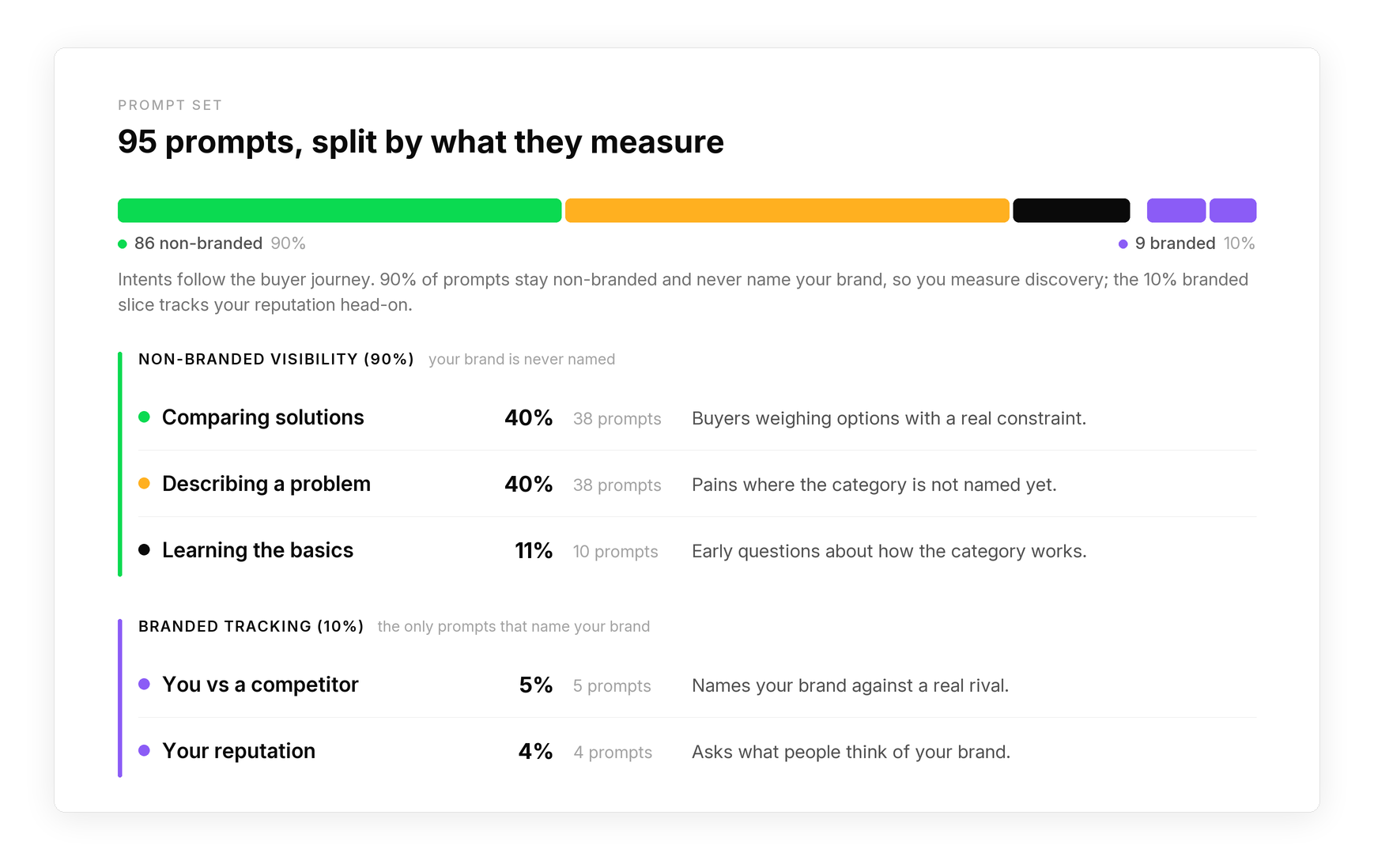
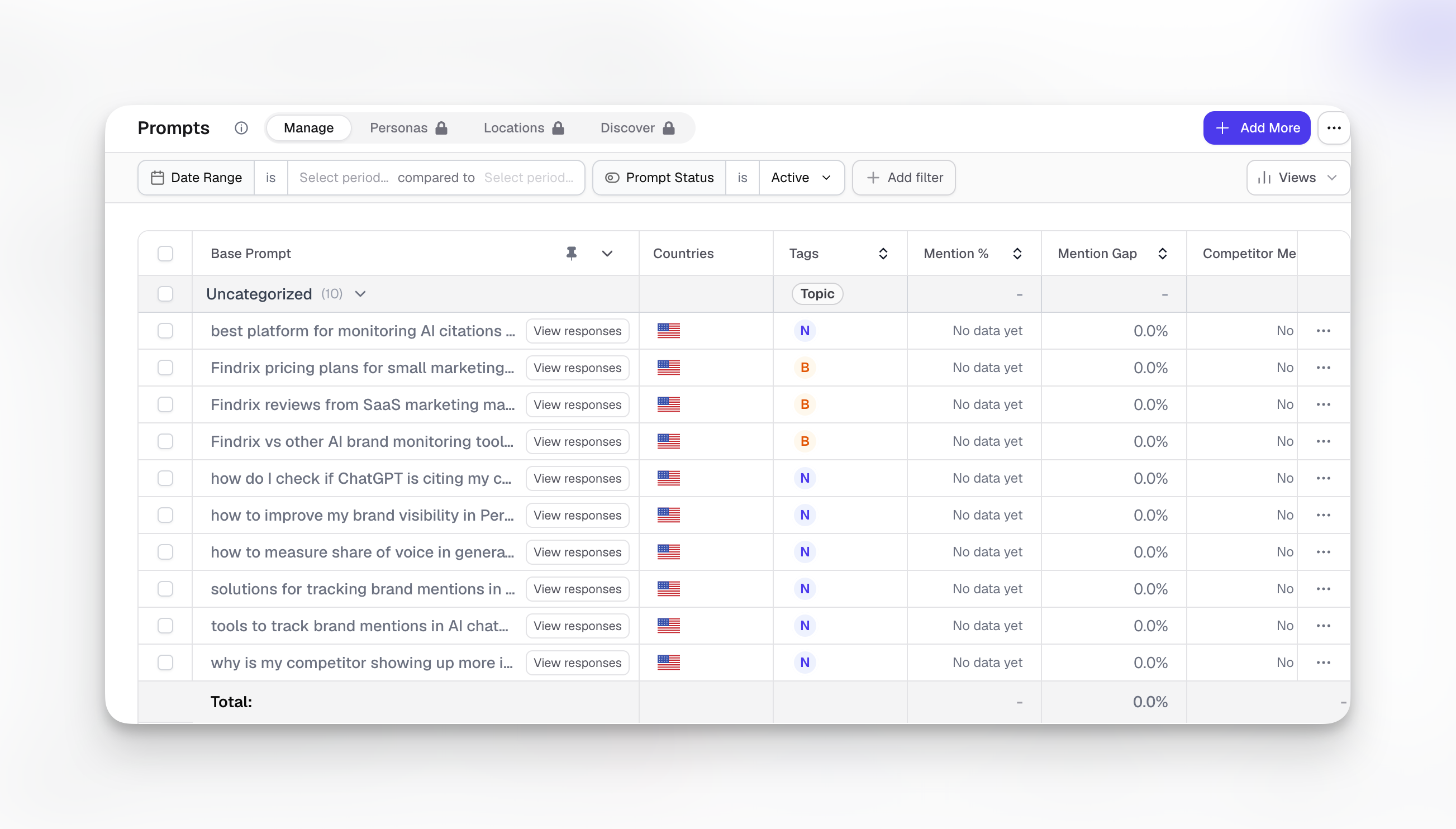
Query set. Nine of every ten questions do not name the brand, because that is how buyers actually ask. The corpus holds a fixed proportion: 40% choosing between solutions, 40% describing a problem without naming one, 10% informational and 10% branded. You read the list, edit it, and add your own, and every question carries a status of measured, proposed or rejected with a reason. Capacity is 60, 100 or 180 questions by tier. If your niche, language or competitor list changes, the set is flagged stale with a banner rather than quietly drifting.
Reliability. Each question goes to each engine 3 times on the entry tier and 5 on the higher ones. Before the first report, a separate calibration run asks the same questions without the judging stage, purely to measure how much the answers move on their own; it produces no report and exists only to set the noise band. Runs are weekly. A movement counts as real only when this week's band and last week's do not overlap, and uncertainty is written in plain words, confident change or within noise, rather than raw statistics. The weekly report is delivered even when the honest answer is that nothing significant moved.
Changing the answer. A 29-check technical audit runs without any LLM, so the same site gives the same result. Findings become Actions cards: each one a before and after with the finished text or markup, why it matters, and a link to a guide for your platform. You apply the change on your side, or reject the card. Findrix does not deploy anything to your site. Fix Wrong Info traces the causal chain from the source that carried a false claim to the answers repeating it, and supplies a correction letter with a Draft, Contacted, Corrected stager. Everything applied lands in an append-only Work Log, and the next weekly run measures the same questions again.
Pricing. Presence $49/mo (3 engines, 60 questions weekly), Growth $99/mo (5 engines, 100 questions, fact-checker on your most-cited pages, ghost citations), Authority $199/mo (180 questions). 7-day trial, billed per site.
The honest caveats. Findrix is the newest tool here, with one review to its name so far, so run it beside whatever you use now for two weeks and let the parallel data decide. It re-measures weekly rather than daily, which is deliberate: Profound's own variance analysis found day-to-day visibility deltas of about two percentage points, mostly noise. And there is no MCP export yet.
2. Profound
Surfaces. The broadest list here: ChatGPT, Perplexity, Claude, Gemini, Google AI Overviews, Google AI Mode, Copilot, Grok and DeepSeek, with AI Overviews and AI Mode named separately. Availability is gated hard by plan, and Starter covers ChatGPT alone. Whether it reads consumer interfaces or APIs is not published.
Evidence. Strong. Raw answers, citation intelligence, cited pages and source categories are all available, alongside crawler analytics. Rank sits in the core metrics. What is not published is whether the product distinguishes a brand mention without a citation from a citation without a mention.
Query set. The best-documented approval gate of any tool here: Profound generates a categorized prompt set for your industry, then asks you to review, edit and approve it before measurement begins, and you can upload your own. Prompt Volumes estimates demand from double opt-in consumer panels with demographic and geographic correction, though not for willingness to share, so sensitive categories are likely under-represented and the output is directional rather than a census.
Reliability. Daily tracking, with results breakable by platform, topic, prompt, tag, region and persona, which is genuinely more slicing than anyone else offers. Profound also published the category's best public variance research, comparing one daily run against ten. In the self-serve product we tested, however, period-over-period movement carried no uncertainty range, and experiment tags isolate a campaign without showing whether the result cleared normal model noise.
Changing the answer. Aim turns data into a project plan and Agents execute it, with templates for briefs, refreshes, drafts and CMS publishing, plus Noble and PartnerStack for outreach. FactCheck compares AI claims against a connected Knowledge Base. It is a system you build rather than a path you follow, and it needs a dedicated operator to be worth the licence.
Pricing and reviews. $99/mo billed yearly for Starter with 50 prompts in ChatGPT only, $399/mo for Growth with 100 prompts across three engines, 7-day Growth trial with a card. G2 rates it 4.5 from 1,128 reviews, the largest verified base in the category, and the recurring complaint is cost.
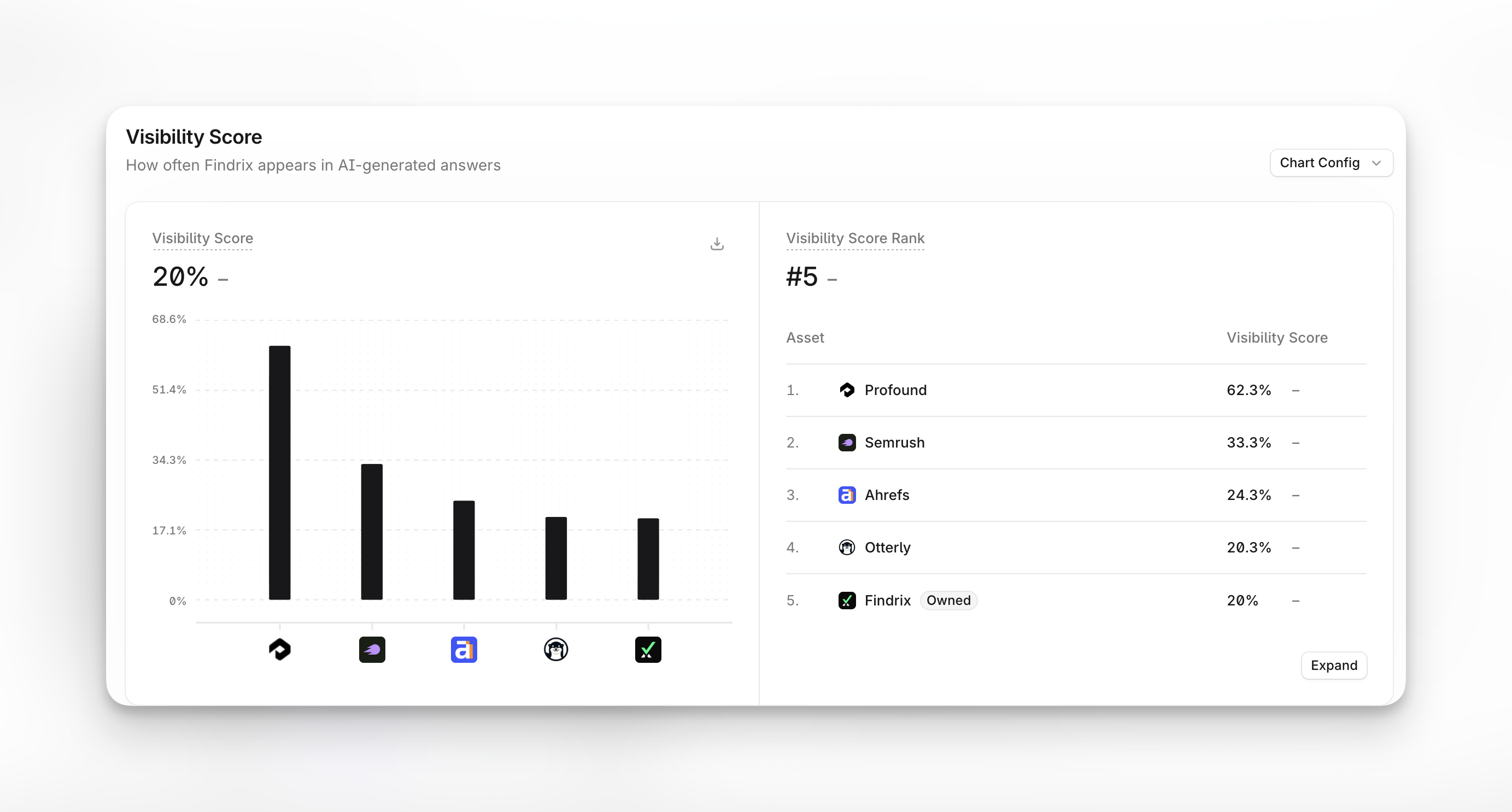
Findrix and Profound are the two tools that publish real measurement research, and Profound's variance work set the bar for daily tracking while offering more engines and more ways to slice them. Findrix turns that research into a working rule, calibrating the noise band before week one and calling a move only when the bands separate, at a $49 entry against $99 for ChatGPT alone. For an SMB team or agency without a dedicated operator, Findrix is the best fit; mature programs that want to design their own system should shortlist Profound.
3. AirOps
Surfaces. Eight engines, with Google AI Overviews and Google AI Mode as separate filter values rather than one "Google AI". Capture method is not published.
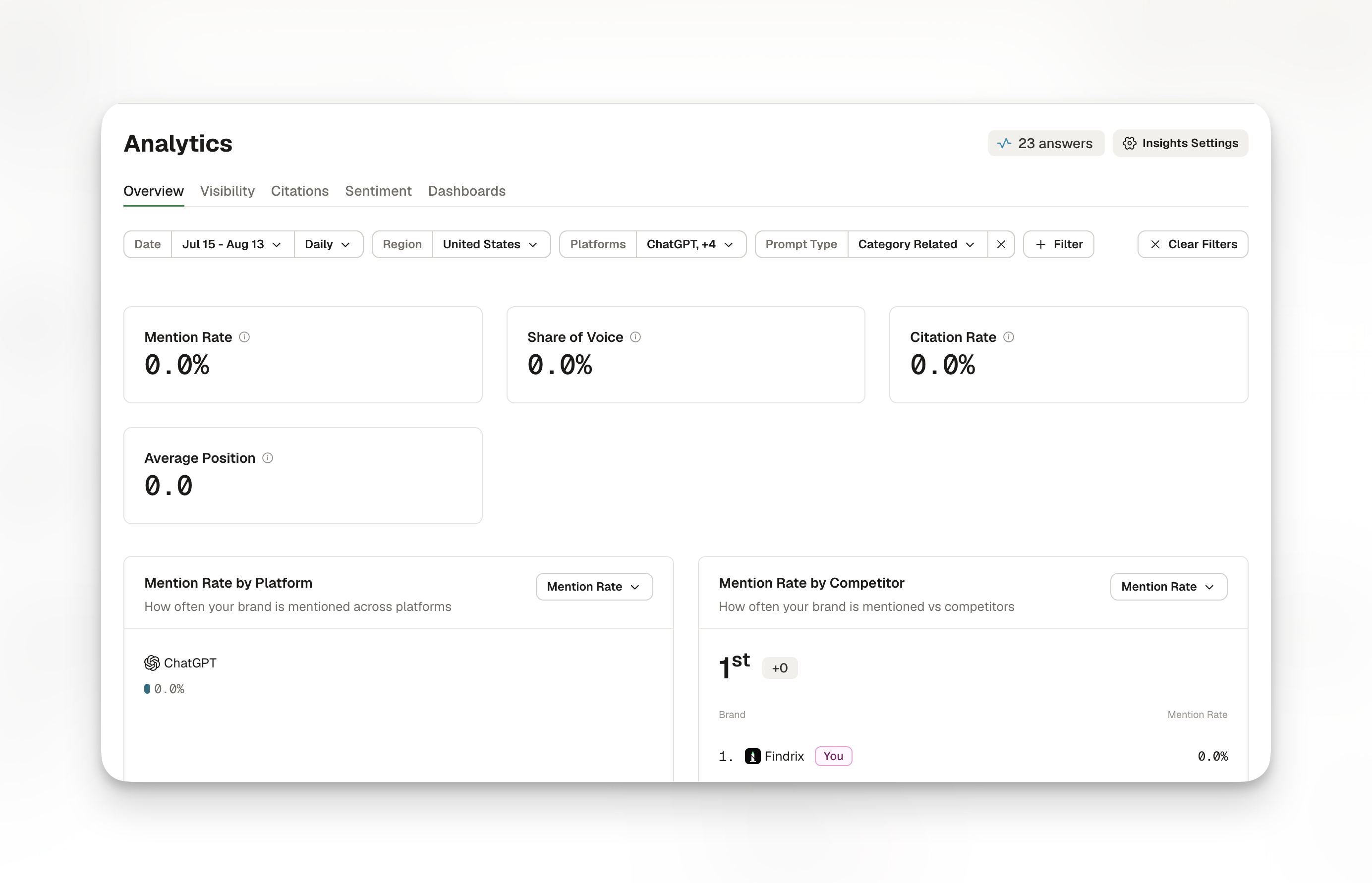
Evidence. Genuinely good. Click any answer row to open the full response, and use platform tabs to compare what each engine said. Average Position is ordinal, so you see whether you were named first or fourth. Mention Rate and Citation Rate are separate metrics, so brand-named and site-cited never collapse into one number, and cited URLs are exposed.
Query set. Two documented sources, both under your control. You bulk-import your own by CSV, or accept from a weekly set of recommendations generated from your Brand Kit and market data. Nothing is tracked until you accept it, and declined recommendations do not resurface. Prompts are auto-classified as brand-related or category-related, which is the branded split most tools leave to you. One limit worth planning around: you can re-file, re-tag and delete prompts after a run, but editing a prompt's wording in place is not documented either way, so get the wording right up front.
Reliability. Daily runs per prompt, with metrics viewable per platform. Runs per prompt per day, variance and any significance threshold are all not published.
Changing the answer. Opportunities sorts recommendations into Creation, Refresh, Outreach and Community, which are action types rather than causes, and content gaps are framed as topics where competitors appear and you have nothing. A root-cause explanation of absence is not published, and neither is an explicit before-and-after verification.
Pricing and reviews. A free Insights tier, with Solo and Pro dollar prices unpublished; third parties estimate roughly $200 and $2,000 a month. G2 rates it 4.7 from 134 reviews, and the sharpest complaint targets the workflow builder.
Findrix and AirOps both gate the question set behind explicit acceptance, and AirOps goes further on turning an accepted prompt into published content at scale. Findrix adds the layer AirOps leaves unpublished: how many times each prompt ran, against what calibrated baseline, and what counts as a real change. For a lean SMB team that needs the number defended, Findrix is the best fit; content factories with an operations owner should shortlist AirOps.
4. Semrush AI Toolkit
Surfaces. ChatGPT, Google AI, Gemini and Perplexity. The prompt database separates AI Overviews from AI Mode, but the custom prompt tracker covers ChatGPT Search, AI Mode and Gemini and skips AI Overviews, so what you can track is narrower than what the database indexes.
Evidence. The weakest on this list, and it matters most here. Semrush does not give you the raw answers. You get scores, narrative drivers and competitor benchmarks, but not the response text a buyer saw, which means the headline number cannot be audited by reading what the engine actually said.
Query set. Prompt Research draws on a database of more than 317 million prompts across 117 regional databases, which is by far the largest research corpus in this comparison. Tracking covers 25 custom prompts. The recurring complaint at setup is that auto-suggested competitors and prompts miss the market, and a Capterra reviewer flagged data problems in the Brand Performance module.
Reliability. Daily updates on the database views and weekly Brand Performance reports. No runs-per-prompt figure, no variance and no significance threshold are published.
Changing the answer. An AI-readiness site audit plus recommendations, which a commenter on one hands-on review characterised as standard SEO advice. No causal explanation of absence and no before-and-after verification are published.
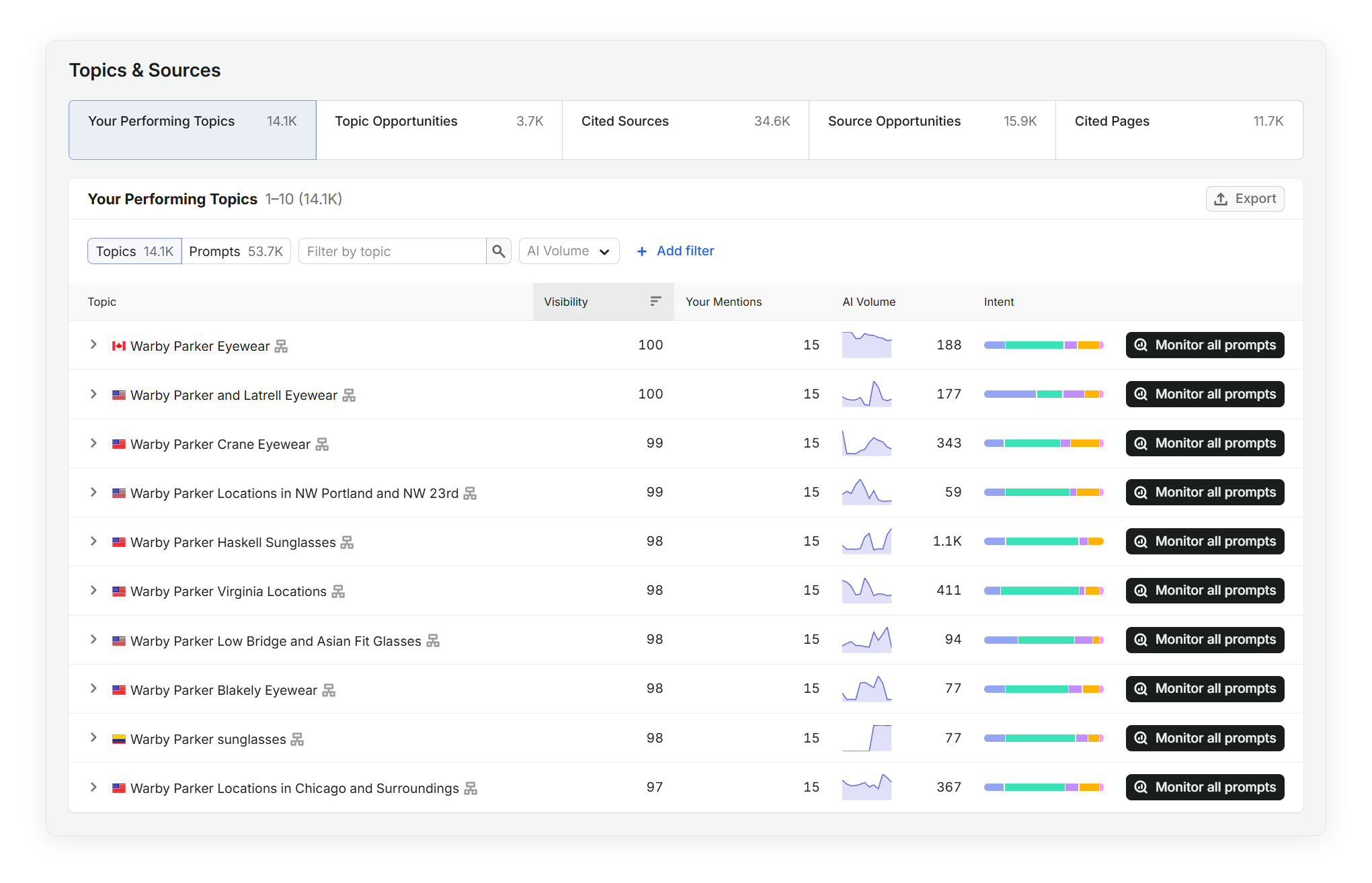
Pricing and reviews. $99/mo per domain, sold standalone or inside Semrush One from $199. Platform ratings are 4.4 on G2 from 4,033 reviews and 4.6 on Capterra from about 2,325, against a reported 2.8 on Trustpilot driven by billing complaints.
Findrix and the Semrush toolkit both sit next to your search data, and Semrush's 317-million-prompt database is a research asset nothing here matches. Findrix hands you the raw answer behind every number and lets you approve the question set before a single run, which is the step Semrush reviewers keep flagging at setup. When you need to audit the number rather than accept it, Findrix is the best fit; teams already inside a Semrush contract will try the toolkit first.
5. Peec AI
Surfaces. Six named: ChatGPT, Google AI Mode, Google AI Overviews, Copilot, Perplexity and Gemini, with AI Overviews and AI Mode separated. You get 3 models even on Advanced; more require an add-on at $35 to $165 a month each, or Enterprise. Capture method is not published.
Evidence. Good on the answer itself. In Recent chats you open a response, read it in full, and see which competitors were named alongside you, with sentiment, source breakdown and share of voice around it. What our hands-on test did not find was a check of those answers against a customer-approved fact base, so a model inventing a spec or misquoting your pricing reads the same as a model getting it right.
Query set. Prompts are generated from your website, industry context and prompts already in the project, and you can add your own manually or by CSV, 50 to 350 on public plans. Peec explains how prompts are generated and organised, but its public methodology does not describe how the final set is tested for coverage across buyer contexts. Its Prompt Volume score is presented as a 1-to-5 relative measure combining search trends and AI conversation data, which is not an observed count of how often buyers submit a prompt.
Reliability. Accepted prompts enter a 24-hour cycle. Every metric is a single number: we found no confidence interval in the product we tested and none in Peec's public methodology, and no repeated-run calibration or threshold for separating a real change from normal model variation is disclosed. A daily cadence produces more observations; by itself it does not make the measurement more reliable.
Changing the answer. Actions clusters gaps into a prioritised to-do and separates owned from earned media, then stops at recommendations, as Peec's own documentation says: it does not write the content for you. On the technical side there are robots.txt checks across 40 or more AI bots and AI-crawler logs, observed rather than fixed.
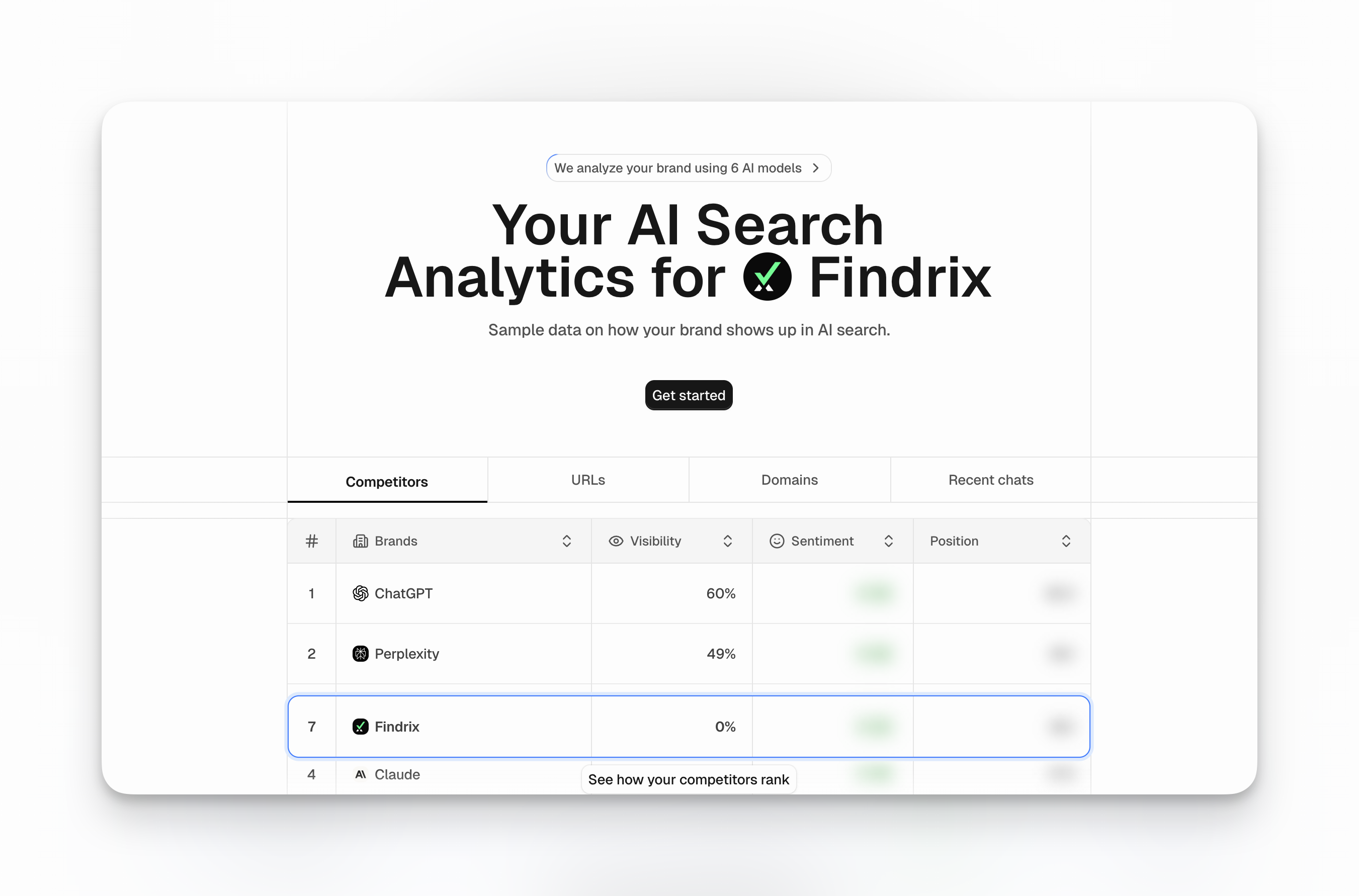
Pricing and reviews. Starter $95/mo, Pro $245, Advanced $495, unlimited seats, 7-day trial with a card. G2 rates it 4.8 from 18 reviews, and one user found 40% of the default prompts overlapping.
Findrix and Peec AI both open the full answer and both track crawler access, and Peec's unlimited seats make it the easier buy for a wide agency team. Findrix grades each answer against your confirmed facts and publishes a calibration run and a confidence range, where Peec presents every metric as a single number. For SEO managers who have to say whether a movement is real, Findrix is the best fit; teams that only need monitoring and already have people to act should shortlist Peec AI.
6. Scrunch AI
Surfaces. Eight on every tier, AI Overviews and AI Mode separately, Grok coming. Scrunch publishes its collection method, which almost nobody does: a mix of browser automation and official platform APIs, chosen per platform to reflect actual consumer interactions.
Evidence. Select a prompt variant per platform to read the full response. Position is bucketed rather than ordinal, into top, middle or bottom of the answer. Every cited URL is captured with its frequency and consistency, and for each you can see whether your brand or a competitor is mentioned on that page, which separates being cited from being named.
Query set. You write prompts, generate them with AI, bulk-upload by CSV, or convert SEO keywords. Prompt Templates let you set personas, countries, languages and platforms and show variant volume before deployment. The guidance is to keep a stable library, 15 to 25 prompts across 6 to 12 topics. A formal pre-run approval step, branded and unbranded separation, and near-duplicate control are all not published.
Reliability. Cadence is stated and unusual: daily for the first two weeks, then every 72 hours by default. Scrunch acknowledges in writing that answers vary session to session and that single runs can be misleading, and smooths results over a 90-day window, the only published smoothing method here. Brand presence is regex matching. Runs per collection, confidence intervals and significance thresholds are not published.
Changing the answer. Technical gaps are named specifically, robots.txt blocks, heavy JavaScript and missing metadata, and the Agent Experience layer serves AI crawlers an optimised parallel version of each page. Re-measurement is explicit: time-series tracking validates improvements after a change. A root-cause explanation of absence and a factual gap category are not published.
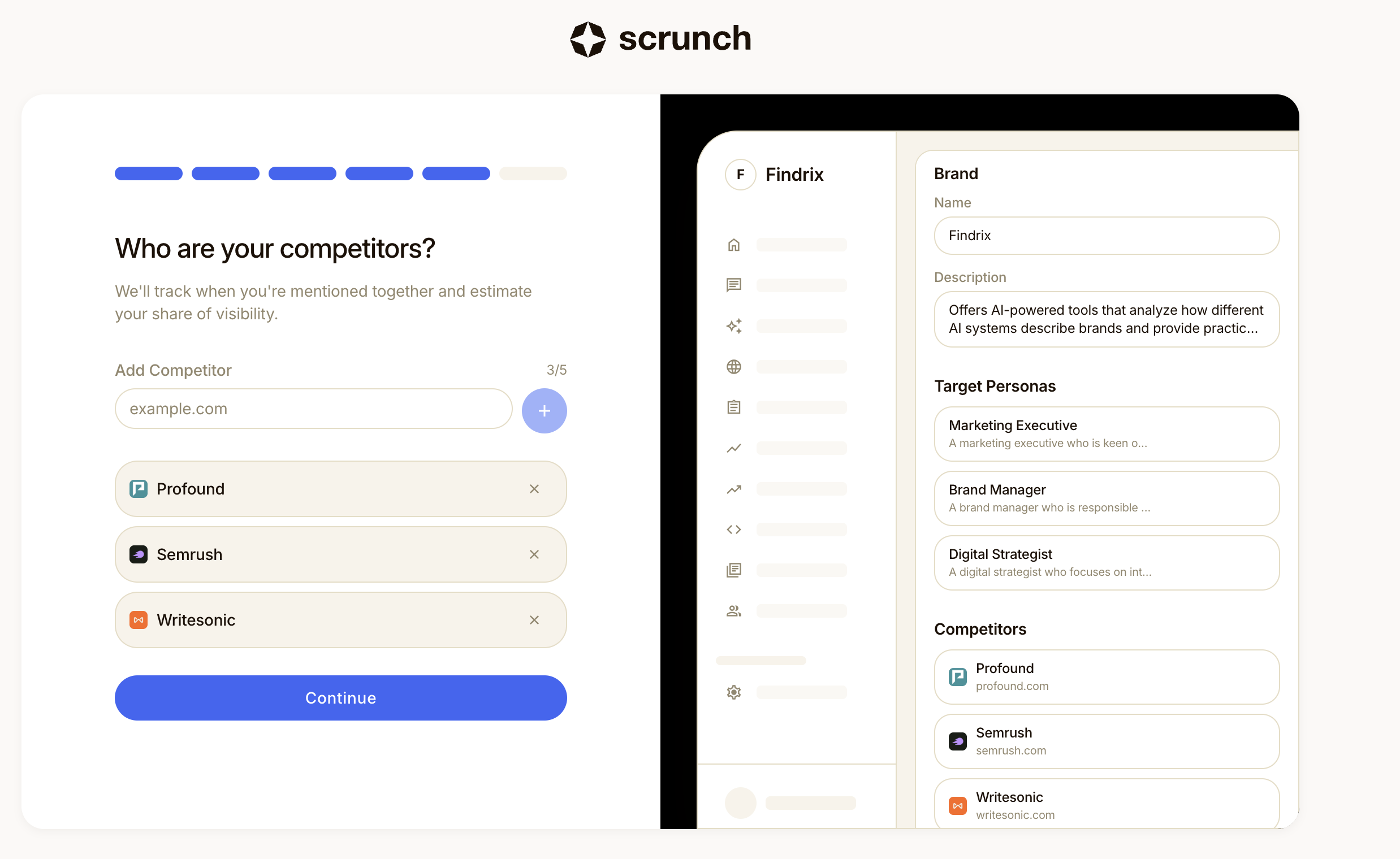
Pricing and reviews. $250/mo billed annually, $300 monthly, 7-day trial. G2 rates it 4.6 from 73 reviews, with export gaps the recurring complaint. Sitecore acquired the company in June 2026.
Findrix and Scrunch AI both publish how they collect answers and both take the technical layer seriously, and Scrunch's persona and geography segmentation is the more detailed picture of an enterprise buying journey. Findrix keeps one canonical site and ships written fixes you apply yourself, rather than maintaining an optimised parallel copy for crawlers, and states a significance rule instead of a smoothing window. Below the enterprise tier Findrix is the best fit; Sitecore-ecosystem enterprises should shortlist Scrunch.
7. Otterly.AI
Surfaces. Four in the base plan, ChatGPT, Google AI Overviews, Perplexity and Copilot, with Google AI Mode, Gemini and Claude sold as add-ons at $9 to $149 a month. That AI Mode is priced separately from AI Overviews is a useful proof that they are different products. Capture method is not published.
Evidence. Prompt-level response detail, cited URLs, Domain Coverage and Domain Ranking, plus sentiment. Brand Coverage reports the share of tracked answers mentioning the brand and Average Brand Position reports where you appeared when several brands were named. One label to watch: the Brand Visibility Index relabels average position as "Likelihood to Buy," which is a different claim from the one the metric supports.
Query set. AI Prompt Research generates prompts from SEO keywords, a URL, or brand and industry context. Its Intent Volume is an estimate derived from Google search volume on a five-level scale, not a count of prompts submitted inside ChatGPT. Branded and unbranded separation, duplicate control and a pre-run approval gate are not published.
Reliability. Daily tracking on every tier. Reviewing its public methodology and self-serve outputs, we found daily values and trend lines but no confidence interval, no margin of error and no separate read on whether a period-over-period change exceeded expected variation. Runs per prompt are not published.
Changing the answer. Recommendations move through Suggested, To-Do and Archive, three a week on Lite and unlimited above, alongside GEO audits. Completed recommendations create an archive, but we found no outcome callback tied to the affected prompts and no explicit test of whether the observed movement exceeded normal variability.
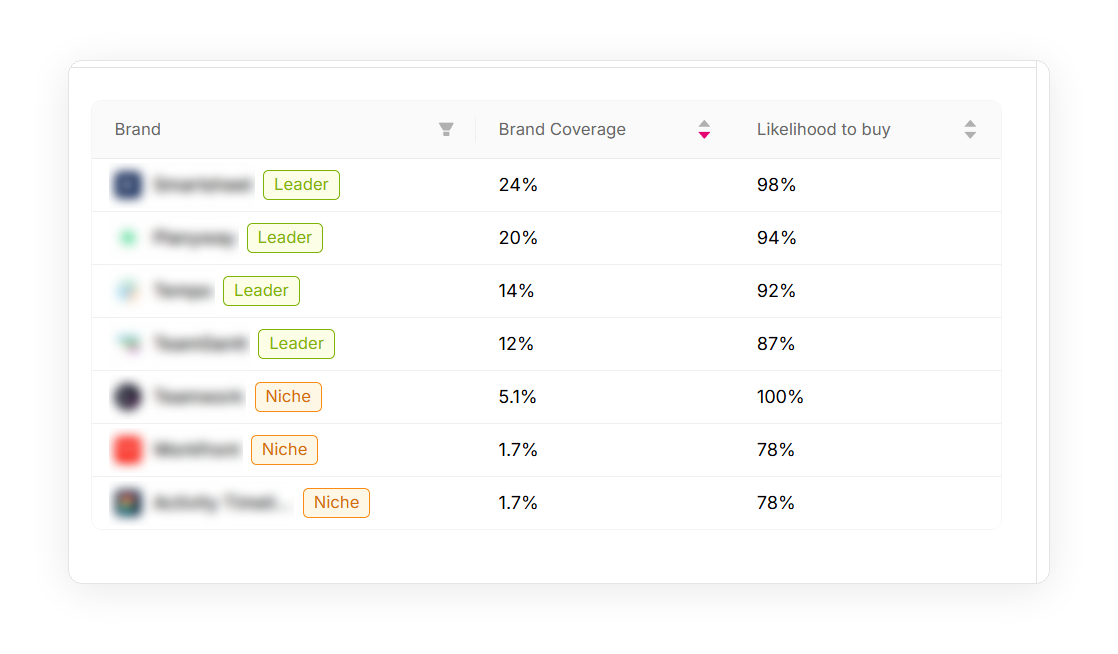
Pricing and reviews. Lite $29 for 15 prompts, Standard $189 for 100, Premium $489 for 400, trial with no card. G2 rates it 4.7 from 54 reviews.
Findrix and Otterly.AI are the two cheapest serious ways into this category, and Otterly runs daily at $29 where Findrix runs weekly at $49. Findrix spends that difference on repetition and calibration, so a movement arrives with a range attached and a rule for reading it, rather than as a bare daily number. For a solo marketer who has to explain why visibility dropped, Findrix is the best fit; if a daily glance is the whole job, Otterly is hard to argue with on price.
8. AthenaHQ
Surfaces. Eleven values in the API, nine on paid plans, with google_ai_overview and ai_mode as separate entries. Capture method is not published.
Evidence. The most complete evidence layer of any tool here. The Responses drawer opens the full response text with prompt details, competitor and source links, attributes and sentiment. Position is ordinal, and mention versus citation is separated at filter level into three distinct filters: Brand Mentioned, Has Been Cited, and Has Attributed Citation. You can search free-text across response text and source URLs.
Query set. Four documented origins: AI generation from your site, manual typing, CSV import, and Discover on Enterprise, which pulls from Search Console, Reddit and YouTube discussion and competitor gaps. You can edit before responses are collected. After that the base text is locked to preserve historical accuracy, and you create a new prompt instead, which is the strictest and most honest stability rule in this comparison. A branded and unbranded mix is recommended as guidance rather than applied automatically.
Reliability. Cadence is user-configurable, defaulting to Monday, Wednesday and Friday, adjustable from weekly to quarterly. Engines are reported separately. Runs per scheduled execution, variance and significance thresholds are not published, and credits are consumed per run without a published per-run cost.
Changing the answer. Oracle handles the factual category properly: it surfaces topics AI gets wrong, lets you mark the correct claim and tracks accuracy by model over time. Insights scores content opportunities by impact and urgency. A root-cause explanation of absence and a four-way gap taxonomy are not published, and neither is an explicit before-and-after verification.
Pricing and reviews. $295/mo Starter with 3,600 credits, a free 300-credit tier below and Enterprise above. G2 rates it 4.9 from 40 reviews, 39 of them five stars.
Findrix and AthenaHQ are the two tools that hold the question set still on purpose, and Athena's locking of prompt text after the first response is the strictest version of that discipline anywhere in this comparison. Findrix pairs a fixed set with a calibration run and a stated significance rule, so a stable set produces a comparable number rather than only a consistent one, at $49 against $295. For teams that need the movement judged as well as recorded, Findrix is the best fit; teams wanting the deepest response-inspection filters should shortlist AthenaHQ.
9. HubSpot AEO
Surfaces. ChatGPT, Gemini and Perplexity. Google AI Overviews and Google AI Mode are not tracked at all, neither separately nor lumped, which is the largest coverage gap here and disqualifying for many businesses. Capture method is not published.
Evidence. Better than its price suggests. Prompt tracking shows the exact response each engine returned, and HubSpot defines the mention and citation boundary explicitly: a source can be cited without mentioning your brand name. Cited domains, pages and content types are broken out by owned, competitor and social. Brand position within the answer is not published.
Query set. HubSpot suggests prompts from your company, competitors and industry, and on Marketing Hub Pro and Enterprise your CRM data informs the suggestions. You can generate 8 to 15 more with AI or add your own, and editing is a documented flow. The tracked set is 25 daily prompts, or 50 on Enterprise, and it is a closed loop that measures only what you told it to watch: Sonary's test account showed 0% visibility despite real presence, and Big Sea found the auto-selected competitors unreliable in all three of their trials.
Reliability. Daily runs are stated, with published volume caps of 2,500 to 5,000 monthly answers. Runs per prompt, variance and significance thresholds are not published, and what happens to historical data when a prompt's text is edited is not published either.
Changing the answer. Recommendations carry a content type, channel and priority, and one click generates a research-backed blog draft. Published content can be tracked for citations it earns. A causal explanation of absence and a gap taxonomy are not published.
Pricing and reviews. $50/mo, $45 annual, free with Marketing Hub Pro and Enterprise, free trial without a card. The standalone G2 listing shows 5.0 from exactly 2 reviews, so treat that as a placeholder.
Findrix and HubSpot AEO both start near $50 and both hand you the exact response, and inside a HubSpot stack the CRM-informed prompt suggestions are a real convenience. Findrix covers Google AI Overviews and Google AI Mode, and builds its question set to a fixed unbranded proportion rather than around a 25-prompt closed loop. If Google's AI answers matter to your pipeline, Findrix is the best fit; HubSpot-native teams topping up an existing stack should shortlist HubSpot AEO.
10. Surfer
Surfaces. Five, with AI Overviews and AI Mode separate, and the most explicit capture disclosure in this comparison: Surfer states it scrapes real answers rather than calling APIs, and claims to be the only AI visibility tool doing so.
Evidence. Its exact-responses feature shows the full AI-generated response as users see it, the sources behind it, and analysis of which facts and phrases keep repeating and which angle the model takes about your brand. That last part is the closest anything here comes to surfacing the phrasing of the recommendation. Average Position covers placement. The mention versus citation boundary is not explicitly defined, and the Sources view is aggregated rather than per response.
Query set. Surfer suggests topics and prompts at project creation, and this is the constraint to know: it can only auto-generate during project creation, so later additions are manual. You can move, edit and delete prompts afterwards. Caps run 25 to 100 by plan. Branded and unbranded separation and duplicate control are not published.
Reliability. The only vendor here besides Findrix to publish a multi-run method: Surfer runs multiple queries per day per model and averages the results to cut through noise, though the number of queries is not published. Cadence is daily on Pro and above, weekly on Standard. No confidence intervals or significance thresholds are published, and the headline Visibility Score blends models by default, so per-engine reading requires filtering.
Changing the answer. Recommendations come as Citation Opportunities, Sentiment Issues and Content Gaps, which map roughly to third-party, perception and own-site. No technical or factual gap category is published, and neither is an explicit before-and-after verification.
Pricing and reviews. AI tracking starts in practice at $99/mo Standard with 25 prompts, daily at $182 Pro. G2 rates it 4.8 from 546 reviews and Capterra 4.9 from 422, with keyword-stuffing risk and customer service the recurring complaints.
Findrix and Surfer are the two tools that both disclose scraping real answers and publish a multi-run method, and Surfer's analysis of the phrasing and angle models use about a brand is the sharpest reading of tone here. Findrix publishes the run count, sets the noise band with a calibration run before week one, and never blends engines into one headline score. When the number has to survive scrutiny, Findrix is the best fit; content teams who live in an editor should shortlist Surfer.
How to choose an AEO tool
Budget first. Under $100 a month, Findrix at $49 is the best fit when you need the number defended and the fix written; Otterly at $29 covers a daily glance. Both have real trials.
Ask every vendor three questions. How many times does each prompt run? Does the set stay fixed between periods? What do you call a real change? Only Findrix, Surfer and Scrunch publish anything on the first, only Findrix and AthenaHQ hold the set still by design, and only Findrix publishes a threshold for the third. The answers separate the category faster than any feature list.
Stack second. Findrix and HubSpot AEO both land near $50 for HubSpot-native teams, while Findrix also reads Google's AI surfaces. Findrix and the Semrush toolkit both sit beside search data, while Findrix hands you the raw answer behind the number. Agencies should weigh Peec's unlimited seats against Findrix's per-site pricing and approval workflow. Enterprise programs with a dedicated operator will shortlist Profound and Scrunch.
And the honest fourth option is DIY. A sharp operator can rebuild parts of this with their own Claude, a scraper and a spreadsheet. What that stack cannot produce is a fixed question set, a calibrated noise baseline, and a defensible statement that this week differs from last. That gap, not any feature, is what you are paying for.
AEO tools vs SEO tools
A rank tracker reads one observable results page. Answer engines are probabilistic and split across surfaces, so surface selection, run frequency, variance handling and question design are the product rather than features on top of it. Our practical guide to GEO covers the discipline behind the tools.
Final thoughts
The category's problem is trust, so buy the tool whose numbers you can interrogate: which surface it reads, how often it runs, and how it separates change from noise. Then make sure the finding becomes a change you can actually make. A dashboard nobody acts on is a slide deck with a subscription fee.
Next reads: our 10 best AI visibility tools comparison, the practical guide to GEO, Findrix vs Profound, and Findrix vs Peec AI.
Want to see where your brand stands this week, with the range attached?
Frequently asked questions
What are the best AEO tools?
Findrix, Profound and AirOps lead in 2026: Findrix for SMB teams and agencies that need a defensible number and a written fix, Profound for enterprise programs with a dedicated operator, AirOps for content execution at scale. Semrush AI Toolkit, Peec AI, Scrunch AI, Otterly.AI, AthenaHQ, HubSpot AEO and Surfer fill out the ten.
How do AEO tools get their data?
Three ways, and the difference decides how much to trust them. Some scrape real consumer answer pages, some call model APIs, which can return different answers than the interface a buyer sees, and prompt-volume estimates come from opt-in panels of uncertain composition. Findrix, Surfer and Scrunch disclose their method; most of this list does not. A brand mention and a site citation are also different measurements, and a good tool separates them.
Can you audit the number an AEO tool gives you?
Only if it hands you the answers behind it. AthenaHQ, AirOps, Scrunch, Surfer, Peec, HubSpot and Findrix all open the full response. Semrush does not give you raw answers at all, which means its scores have to be taken on trust.
What's the difference between AEO, GEO and AI visibility tools?
Mostly naming. All three describe software that tracks and improves brand presence in AI answers; AEO emphasises answer surfaces, GEO emphasises generative engines. The same products appear under every label, which is why our AI visibility tools list overlaps with this one.
How much do AEO tools cost?
Self-serve runs from $29 (Otterly) through $49 to $199 (Findrix), $95 (Peec), $99 (Semrush, Profound, Surfer), $250 (Scrunch) and $295 (AthenaHQ), with enterprise on custom quotes. Watch engine add-ons: several vendors sell Claude, Grok or AI Mode separately, and full coverage can double a headline price.
Read next
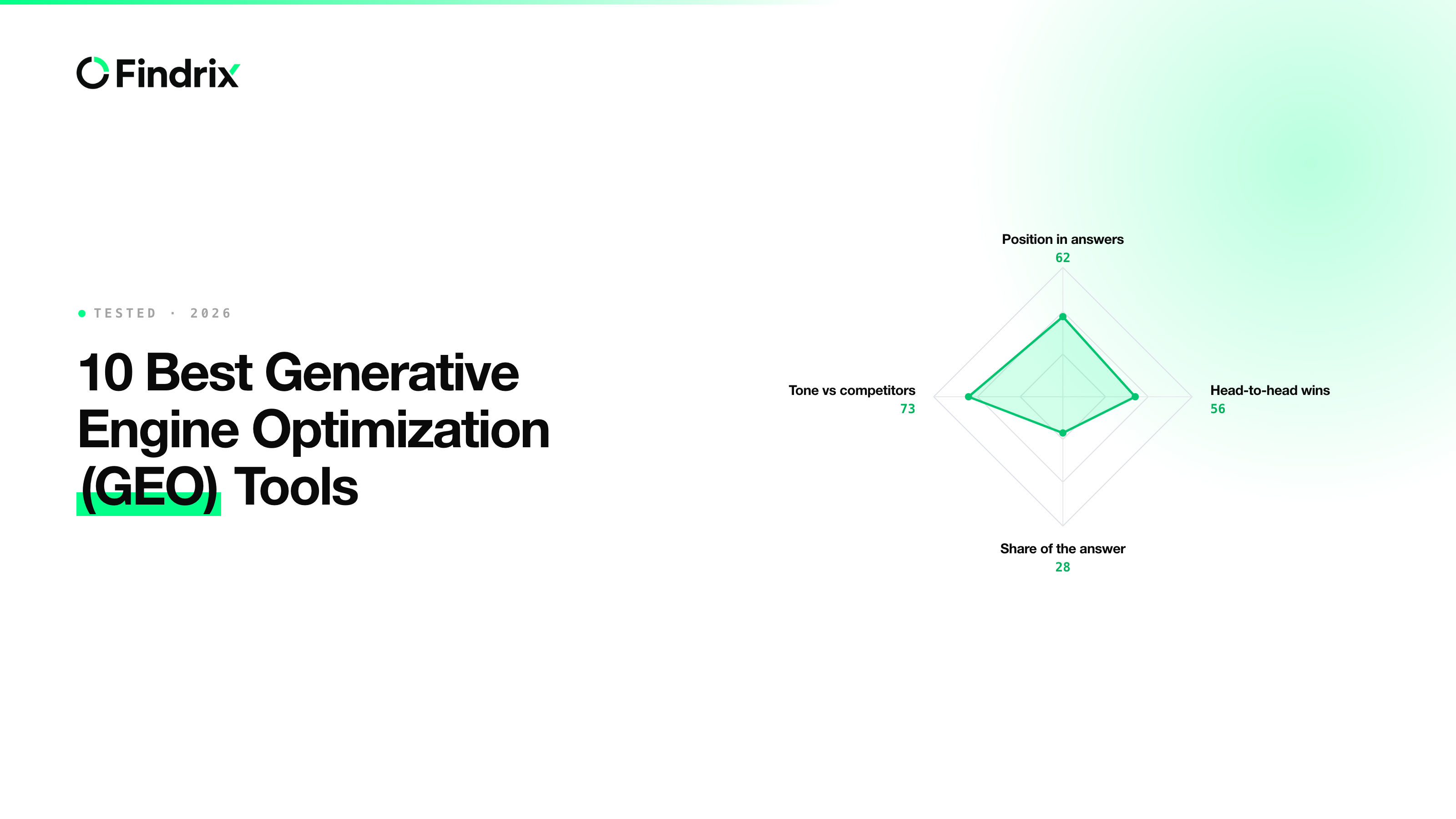
10 Best Generative Engine Optimization (GEO) Tools in 2026: Tested & Compared
This comparison from Findrix ranks the 10 best generative engine optimization (GEO) tools of 2026 by the work they actually do: finding gaps in ChatGPT, Perplexity, Gemini and Google AI Overviews, explaining what to change, drafting the fix, and re-measuring after it ships, with prices from $49/mo.
10 Best AI Visibility Tools in 2026 (Tested & Compared)
This article from Findrix compares the 10 best AI visibility tools of 2026: engines covered, methodology transparency, AI preference scoring, fact checking, trials, and entry pricing, with honest picks by job. Findrix is an action-based AI visibility and GEO platform.