

 Deutsch
 Français
 Español
 Português (Brasil)
 Italiano
10 Best Generative Engine Optimization (GEO) Tools in 2026: Tested & Compared
 Yosif Merman12 min readAugust 27, 2026
TL;DR
Findrix is the best generative engine optimization (GEO) tool for most teams in 2026, because it runs the whole improvement loop — finding gaps, explaining what to change, drafting the fix and re-measuring after it ships — starting at $49/mo. Enterprise programs with dedicated ops teams tend toward Profound; fully hands-off page production is RankAI's territory; ecommerce catalogs down to the SKU go to Glara. We ranked all ten tools in August 2026 by the work they actually do across ChatGPT, Perplexity, Gemini and Google AI Overviews, not by the size of their dashboards.
We ranked the ten tools below by signing up and using trials where they exist in August 2026, and by public documentation and pricing pages for the rest. One note before we start: GEO here means generative engine optimization.
How we evaluated GEO tools
We evaluated generative engine optimization tools based on these five jobs they do.
Identify opportunities fast
Find the prompts where your brand is absent, wrong, or losing to a competitor.
Explain what to change
Return a prioritized list, not a score.
Draft the fix
Produce the change ready for a human to review.
The fixes themselves fall into four types of work:
- technical on-site patches (content AI crawlers cannot read, broken structure);
- content topics for new pages;
- off-site work on the sources LLMs cite;
- corrections of factual errors in what AI says about the brand.
Job one is more subtle than it looks. When a buyer asks a model for "best running shoes to buy," the prompt reaches the model as-is, but the model then transforms it into a query fanout: a set of related searches it runs behind the scenes.
Most products in this market, including many sold as AI search optimization tools or LLM SEO tools, stop at job one. They tell you where you stand and leave jobs two through five to you. AEO tools built for answer tracking have the same ceiling.
A tool that explains, drafts and re-measures beats a tool that only observes, whatever its charts look like.
How the ten tools compare
| Tool | Identifies opportunities | Explains what to change | Drafts the fix | Price + trial |
|---|---|---|---|---|
| Findrix | Prompt + competitor gaps, brand errors | Prioritized what-to-change list | Technical patches, content briefs, error corrections | From $49/mo, free report |
| Profound | Prompt volumes, answer insights | Aim prioritization | Agents generate content (credits) | $99/mo (ChatGPT only, annual); $399/mo full |
| AirOps | Visibility tracking | Playbooks | Quill agent drafts content | Free tier; paid custom |
| Writesonic | Action Center | Prioritized fixes | Page rewrites, schema, FAQ | GEO from $199/mo |
| AthenaHQ | 9-model monitoring | Recommendations | Content agents, llms.txt, robots.txt | Free credits; $295/mo |
| Goodie | Prompt research | Optimization actions | AEO Writer | Explorer $399/mo |
| RankAI | Traffic data | Not offered | Full pages | Custom (demo) |
| Glara | SKU-level gaps | Catalog audit | Descriptions, structured data, FAQ, meta | $120–$345/mo |
| Scrunch | 6-surface monitoring, error detection | Page audits | Machine-readable site layer (AXP) | From $250/mo (annual) |
| Semrush AI Toolkit | Prompt + competitor research | Recommendations | Not offered | $99/mo per domain |
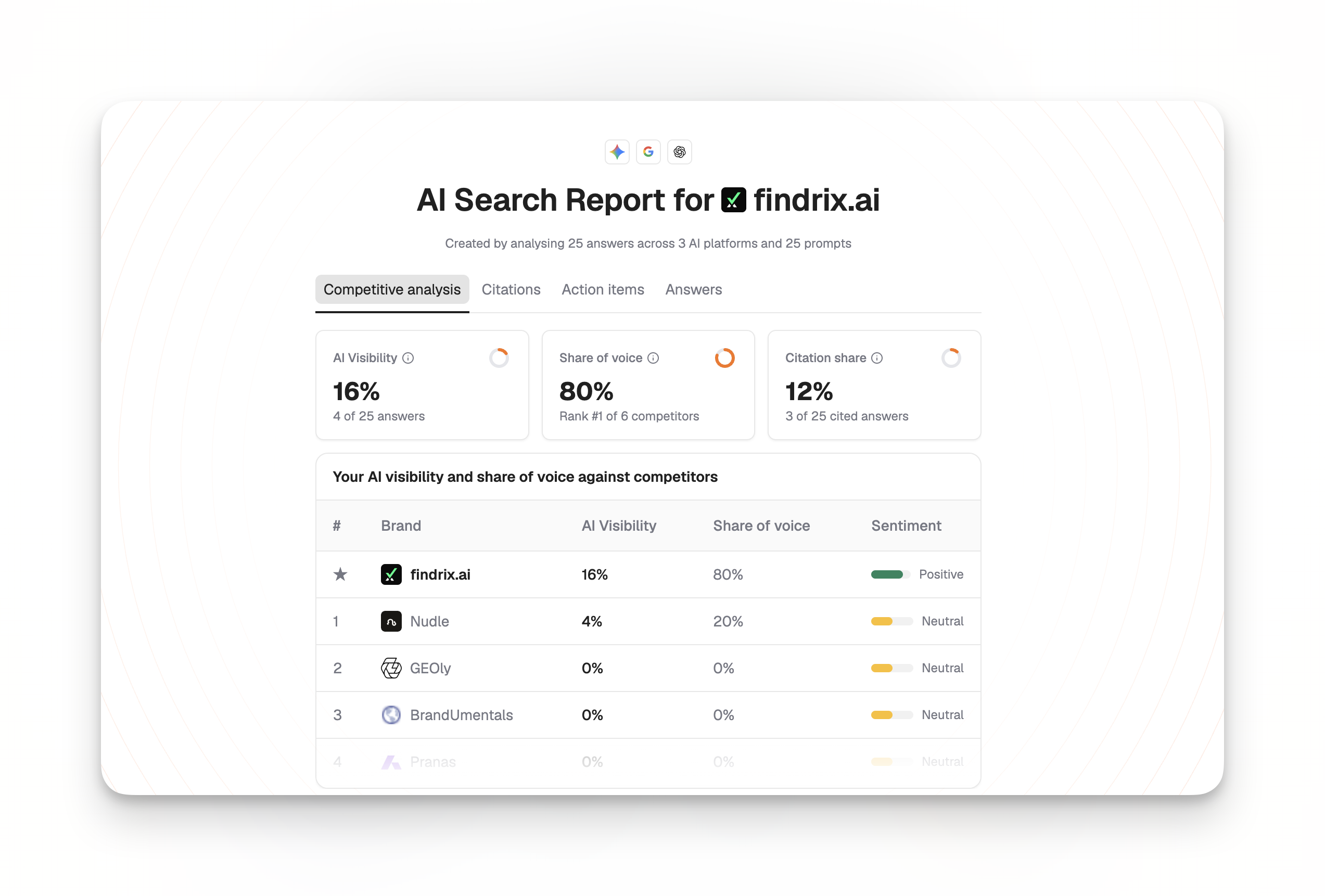
1. Findrix
Findrix is a GEO platform built around the improvement loop rather than the scoreboard. It starts where trust starts: with your actual prompts and your actual competitors. Findrix locks them into a golden set: a fixed, approved list of prompts and competitors that every measurement run uses, so this month's numbers are comparable with last month's instead of drifting with whatever got sampled. Each prompt in the set is sampled repeatedly, so the numbers come with confidence intervals instead of false precision.
Then it walks through all four types of GEO work.
Technical on-site patches
Findrix audits how AI crawlers see your pages and separates verified problems from guesses. If text is rendered by JavaScript and absent from the raw HTML, an AI bot that does not run JavaScript will never see it; Findrix flags that as verified, drafts the patch, and leaves heuristic hunches labeled as hunches. Nothing gets marked urgent unless the evidence is there.
Rendering is also where fixes stall: "This is usually the hardest one for a client to fix, because it means getting into the CMS and understanding how the site is built. That's an engineering job, not a copy change," Wells says. A drafted patch a developer can review beats a finding a marketer has to translate.
Content topics for new content
Content work splits in two. For pages you already have, Findrix shows which ones the models read for a prompt and what they miss: a comparison the page never makes, a question it never answers, a claim it never states, and drafts the edit. For questions where you have no page at all, the prompt data shows which topics your buyers ask about where you are absent, and Findrix turns those gaps into content briefs with the target prompt attached.
Off-site work
LLMs lean on a small set of sources per category. Findrix maps the domains and pages the models actually cite for your prompts, so outreach goes where citations come from instead of where backlinks used to.
Brand-error corrections
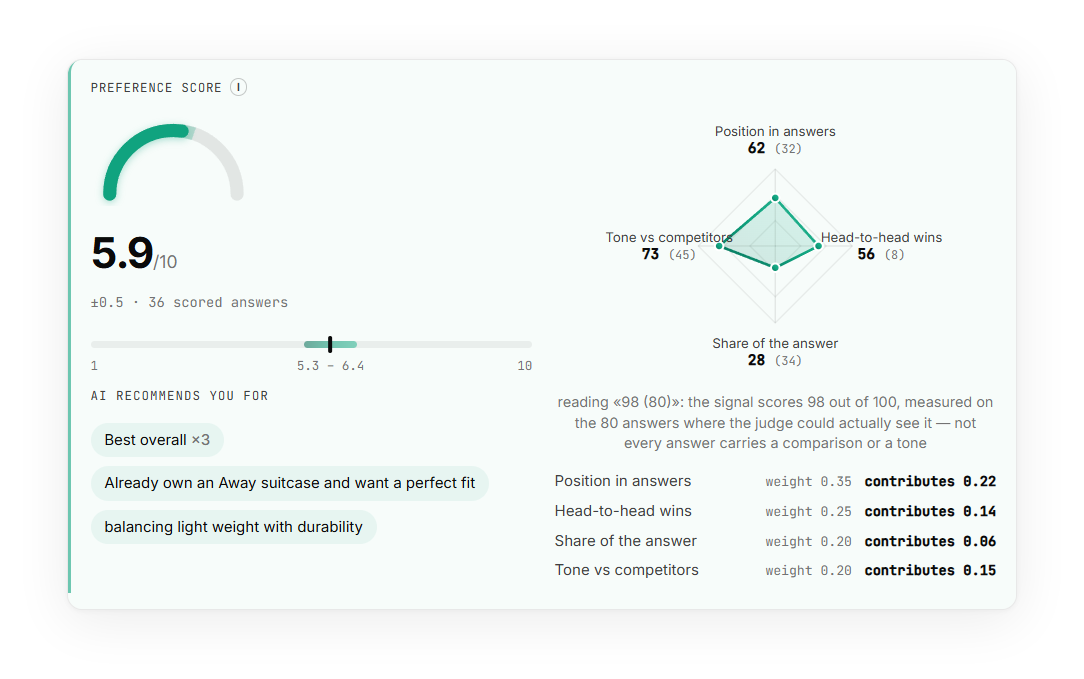
When a model states something false about the brand, Findrix catches it, shows the source the error came from, and drafts the correction. Its preference score also measures which brand a model picks when asked to compare, which is the number a marketing lead can put in front of a boss or a client.
After a fix ships, Findrix closes the loop in two steps. First it records whether the recommended change was actually implemented, so a finding cannot sit in a report forever with nobody knowing if it was acted on. Then it re-runs the golden set and shows whether the relevant AI answers moved: share of voice, the preference score, and whether the brand error is gone. That is the full loop: identify, explain, draft, verify, re-measure.
Pricing starts at $49/mo, and the free AI visibility report shows the gaps before you pay anything.
The honest limits: Findrix drafts fixes and hands them to you for review; it does not publish changes to your site on its own. That review step is the design, and it is also the answer to doing all of this by hand in your own Claude: Findrix and a DIY prompt stack both let you probe AI answers, while Findrix also keeps the golden set, the re-measurement runs and the fix history in one place, which saves a solo marketer the part of the job that quietly eats the week.
2. Profound
Profound is an enterprise AEO platform. It tracks nine surfaces including ChatGPT, Perplexity, Claude, Gemini, Copilot and Google AI Overviews, adds prompt volume data, and runs agent analytics through Cloudflare, Vercel and AWS integrations. Its Agents generate and optimize content on a credit system, and Aim prioritizes what to do first. In July 2026 it launched FactCheck, which compares AI claims against a brand knowledge base and traces wrong answers to their sources; that feature is available to enterprise customers.
Pricing: the $99/mo Starter covers ChatGPT only, with 50 prompts, on annual billing. The full platform starts at $399/mo, enterprise custom above that.
Strengths: nine tracked surfaces, prompt volume data, and $96M raised in a February 2026 Series C.
Weaknesses: the entry tier is a narrow slice of the product, and the platform is shaped for enterprise teams with process to spare. The Agents run on credits (100/mo on Starter, 400/mo on Growth), and each run burns credits relative to its complexity, so the drafting layer is metered rather than included: lean on it and the bill climbs fast. Read the full Findrix vs Profound comparison for the line-by-line.
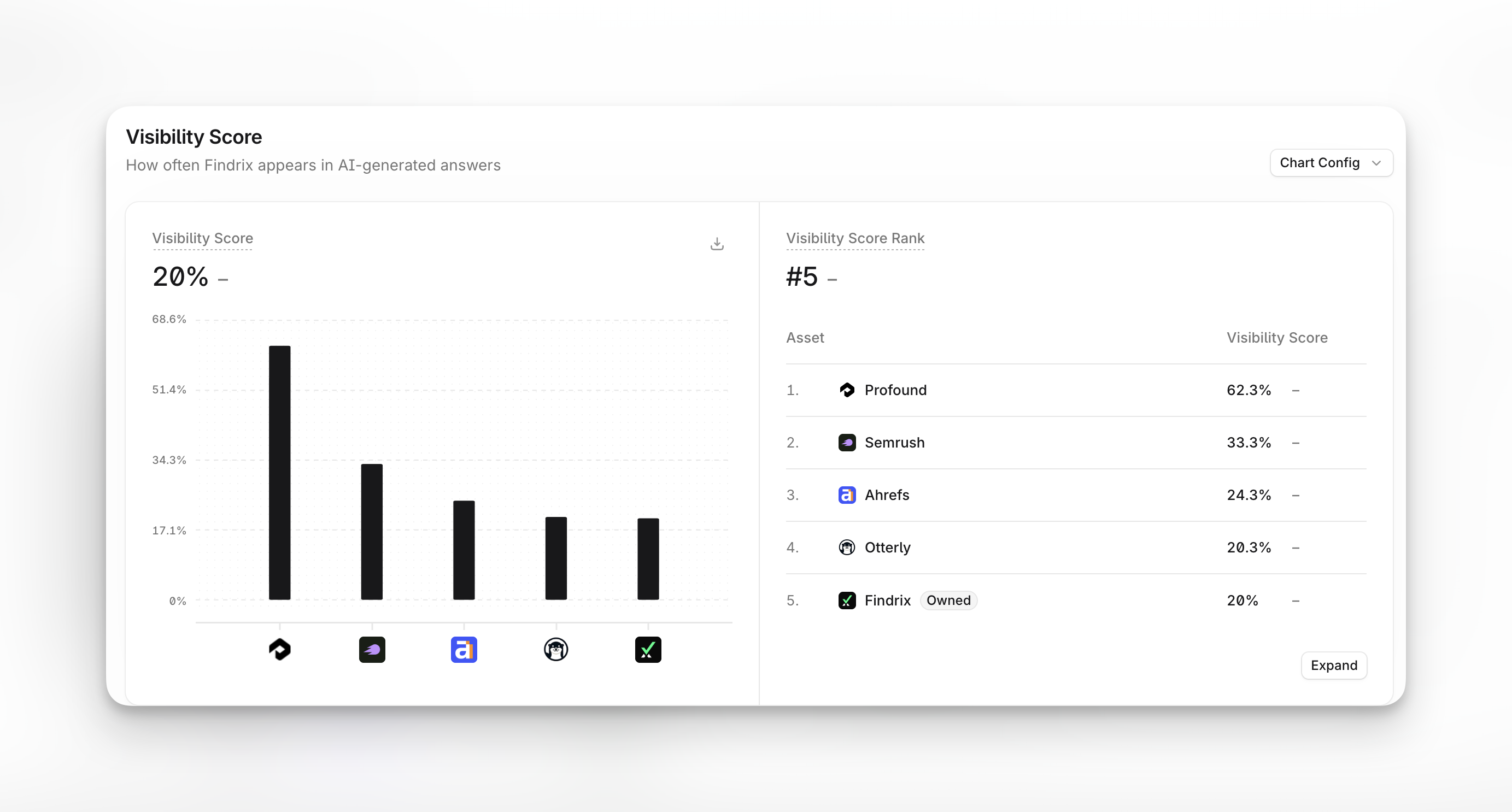
3. AirOps
AirOps approaches GEO from content operations. It tracks visibility in ChatGPT, Google AI Overviews, Perplexity and Gemini, then feeds the gaps into Workflows and its Quill agent, which produce content under a Brand Kit and publish through Webflow, WordPress, Contentful, Strapi, Sanity or Shopify. Its public Webflow case reports a 500% lift in AI-attributed signups (vendor-published figure).
Pricing: a free Insights tier for one user; paid tiers are not published, enterprise is custom.
Strengths: a content pipeline that drafts, publishes through six CMS integrations, and tracks after publish.
Weaknesses: it is built for enterprise content teams with steady production volume, and you cannot see the price without a sales call.
4. Writesonic
Writesonic pivoted from AI writing into GEO and kept the writing muscle. It tracks ten AI platforms across 50+ markets, and its Action Center prioritizes fixes: page rewrites, FAQ blocks, schema, comparison tables, robots.txt corrections, plus outreach drafts for Reddit and YouTube citations. Deployment goes through WordPress, an API, or MCP.
Pricing: full GEO features from $199/mo; a $79/mo starter covers ChatGPT only on annual billing.
Strengths: broad platform coverage and a real drafting layer at mid-market prices.
Weaknesses: one-click deployment stops at WordPress, and the product still carries its content-writer DNA; brand measurement is newer than the writing tools.
5. AthenaHQ
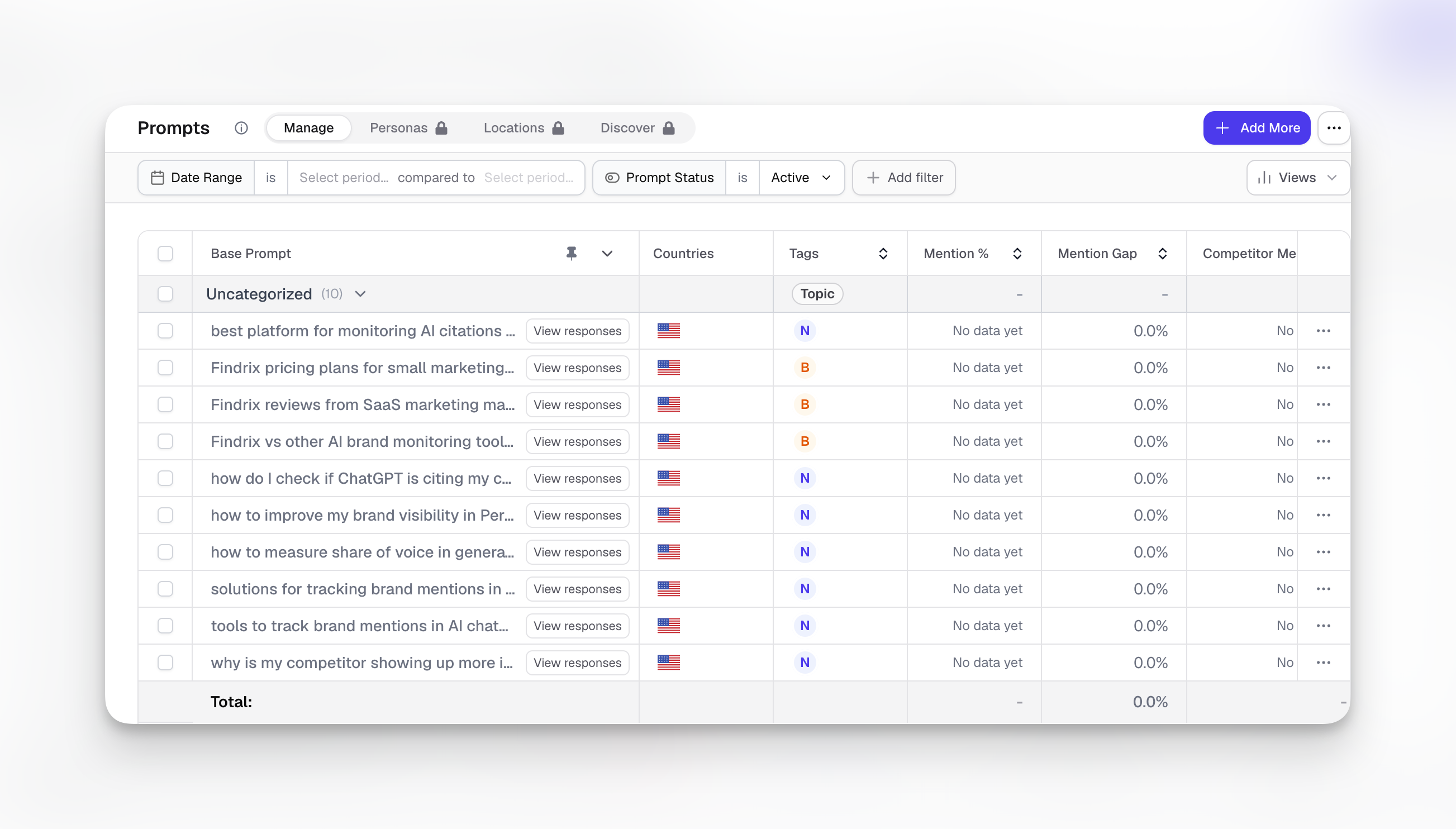
AthenaHQ is a YC-backed GEO platform with content agents. It monitors nine models, tracks prompt volume and sentiment, and its agents handle on-page and off-page actions: content optimization, llms.txt and robots.txt, a citation engine, and hallucination detection under its Brand Integrity module. Shopify and Webflow integrations connect the fixes to the site.
Pricing: a free tier with 300 credits, then Starter at $295/mo, enterprise custom.
Strengths: wide action coverage for the price, founders from Google Search and DeepMind, strong G2 reviews.
Weaknesses: the jump from free credits to $295/mo is steep, and the credit model makes monthly costs harder to predict than flat plans.
6. Goodie
Goodie sells a closed loop for enterprise answer engine optimization: prompt research, visibility monitoring, optimization actions, and attribution, across 12+ models. Its AEO Writer produces content in brand voice, and an agentic commerce suite covers ChatGPT Shopping and Amazon Rufus. Vendor-reported cases include a 127% lift in AI-driven conversions for Dermalogica.
Pricing: Explorer at $399/mo is the only self-serve tier; everything else is custom.
Strengths: the loop is genuinely complete for enterprise accounts, and the commerce coverage is unusual.
Weaknesses: there is no entry below $399/mo, Goodie needs 24–28 hours to collect the data, and fixes are generated rather than deployed; publishing stays with your team.
7. RankAI
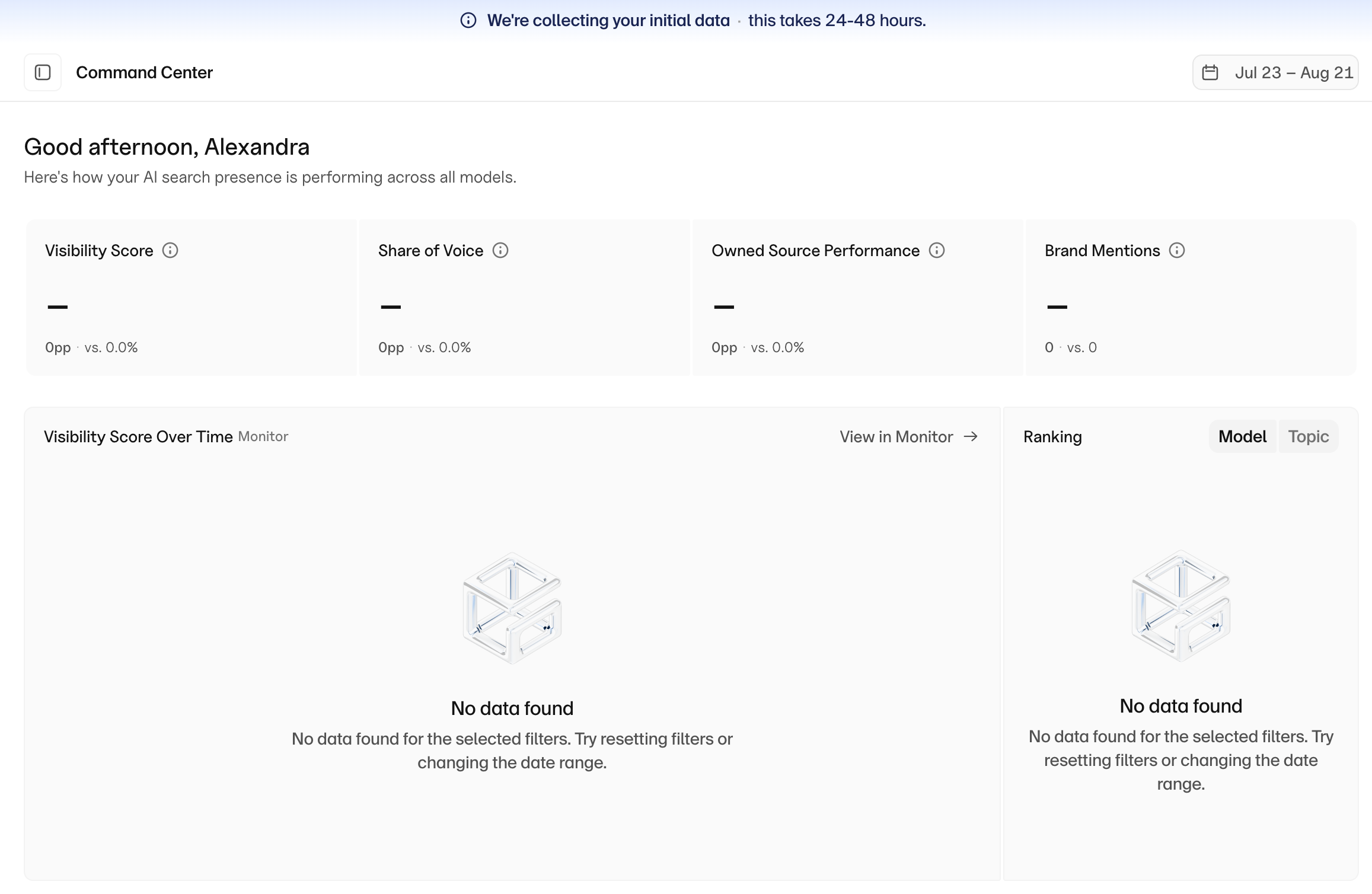
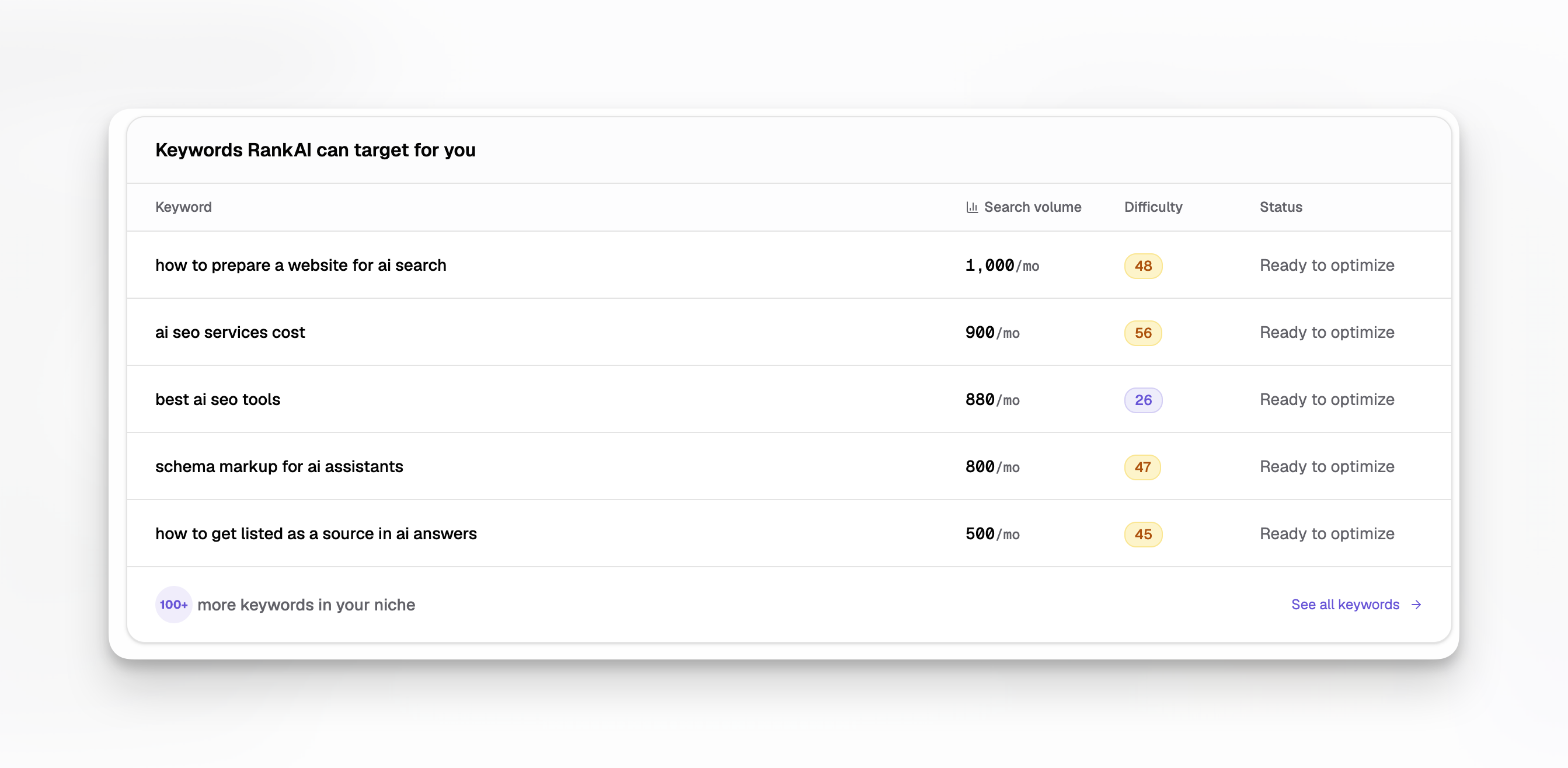
RankAI is the autopilot of this list. Its agent studies the business, then creates and publishes SEO and AEO pages directly to Webflow, Framer, WordPress, Next.js or Sanity, and rewrites them based on traffic data. No drafts waiting for review: pages go live and iterate.
Pricing: not published; demo-based.
Strengths: pages go live and iterate without waiting on a review queue. Vendor-reported cases include a 252% impressions lift for LiveTinted.
Weaknesses: brand monitoring is thin, the team is small, and pages publishing themselves is exactly what some brands cannot allow. If your legal or brand team reviews content, this workflow will fight you.
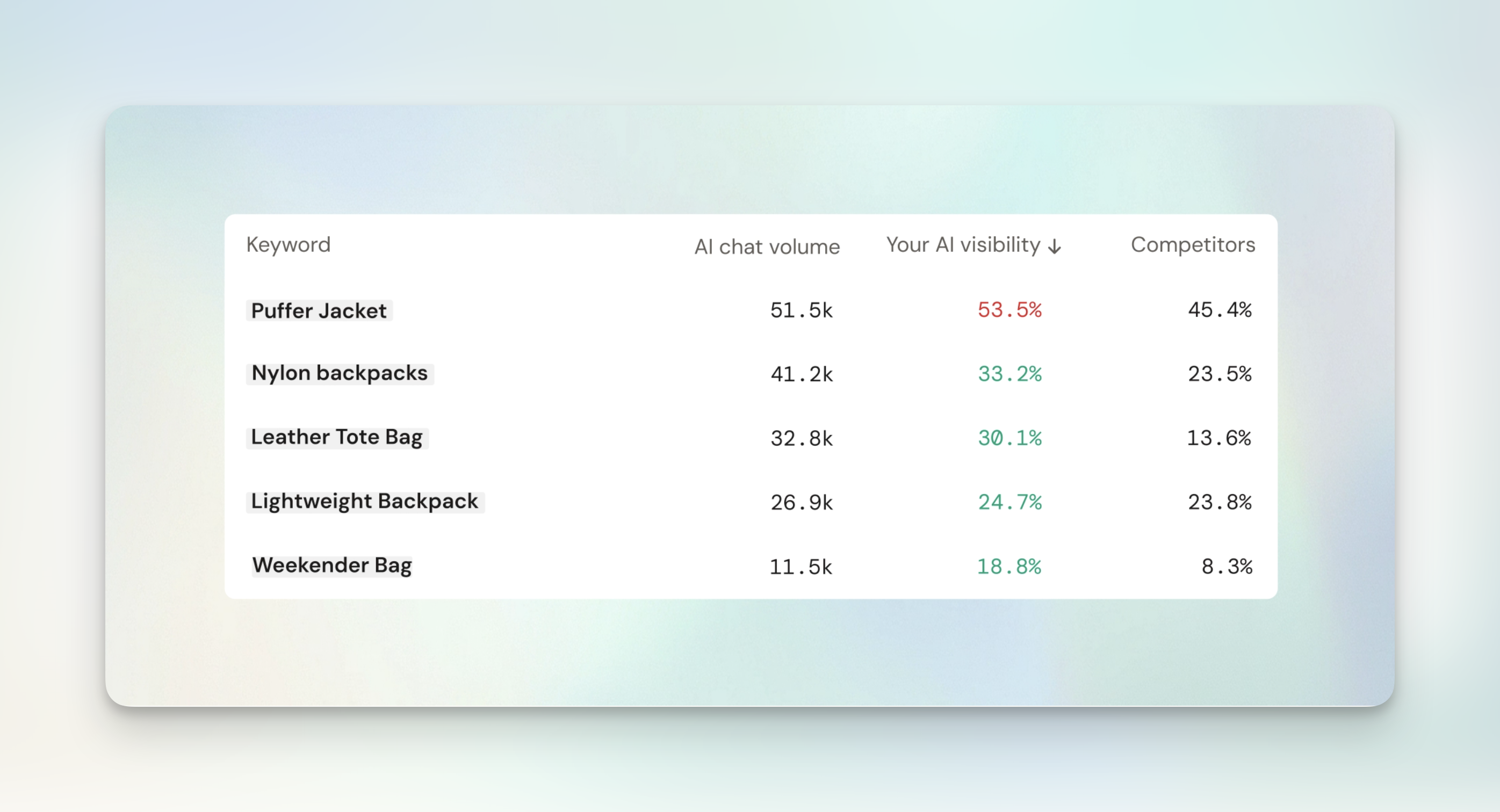
8. Glara
Glara does GEO for ecommerce only, down to the SKU. It tracks how five AI models present brand and products, audits the catalog, generates fixes (descriptions, structured data, FAQ, meta) and pushes them to the store with manual approval. Revenue attribution ties AI traffic to sales through Shopify and GA.
Pricing: Starter at $120/mo covers 20 products; Advanced at $345/mo; enterprise annual custom.
Strengths: SKU-level visibility and store-level deployment with a human approving every change, which is how ecommerce teams actually work.
Weaknesses: product data only. Blog content, technical site issues and off-site work are out of scope, and non-Shopify stores get less.
9. Scrunch AI
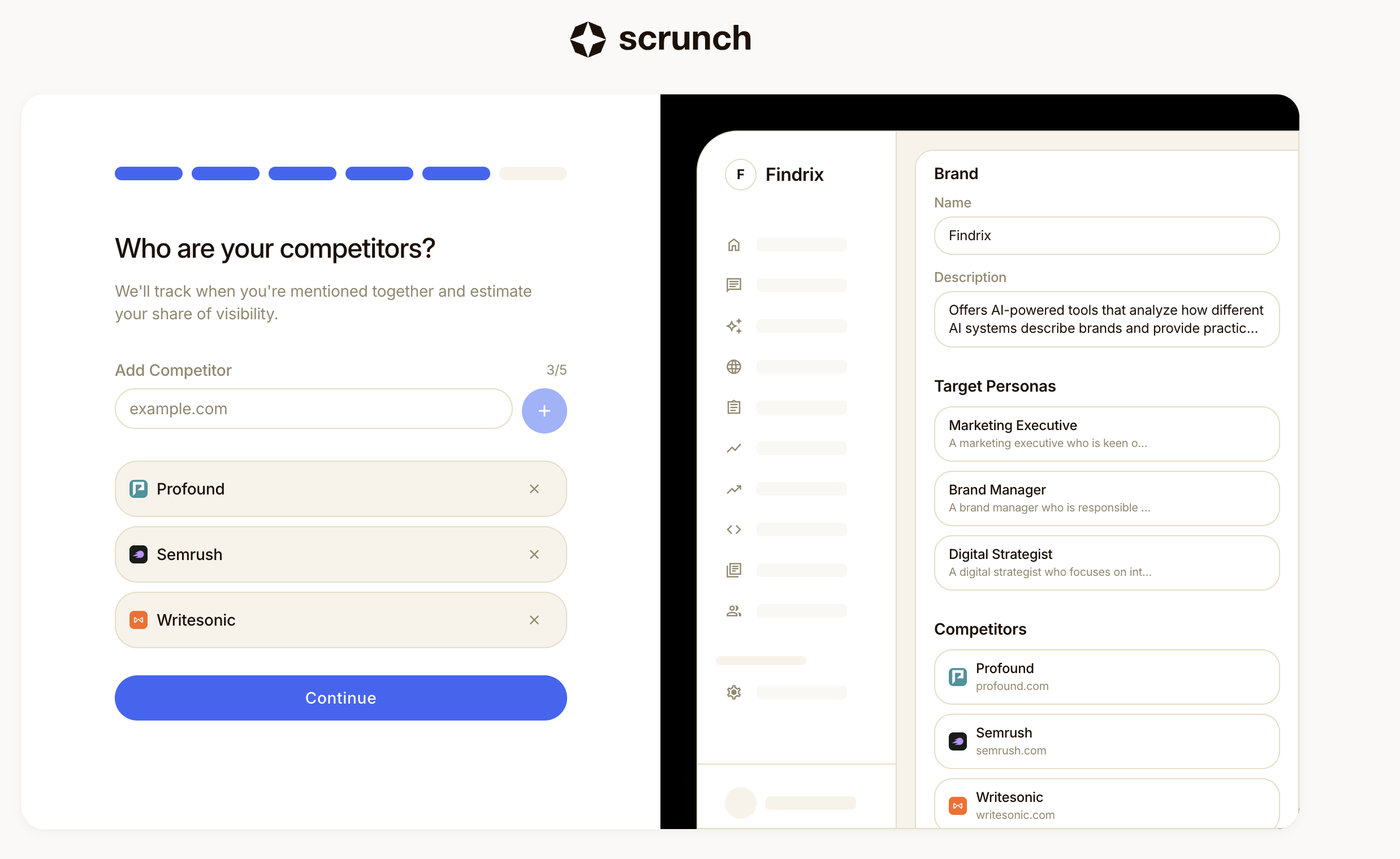
Scrunch answers the fix question differently: instead of editing your site, it serves a parallel, machine-readable version of it to AI crawlers and agents through its Agent Experience Platform. Monitoring covers six surfaces with citation analysis and error detection, and page audits show what agents fail to parse.
Pricing: Starter at $250/mo on annual billing with 350 prompts; Growth at $417/mo.
Strengths: fixes reach AI systems without touching your CMS, templates or release process. Lenovo and Crunchbase are public customers.
Weaknesses: your human-facing site stays unoptimized, you maintain a second representation of it, and the approach is a bet that agents will keep reading the parallel layer.
10. Semrush AI Toolkit
The Semrush AI Toolkit is the rational add-on if your team already lives in Semrush. For $99/mo per domain it tracks mentions across ChatGPT, Perplexity, Google AI Overviews, Gemini and Claude on 25 prompts, with prompt research, competitor research and an AI site audit. Since April 2026 it is part of Adobe.
Strengths: zero new vendor overhead, familiar interface, and the audit connects AI visibility to the SEO data you already have.
Weaknesses: 25 prompts per domain is a narrow window, and the toolkit recommends without drafting or verifying anything. It observes; the work stays yours.
Best GEO tools for agencies
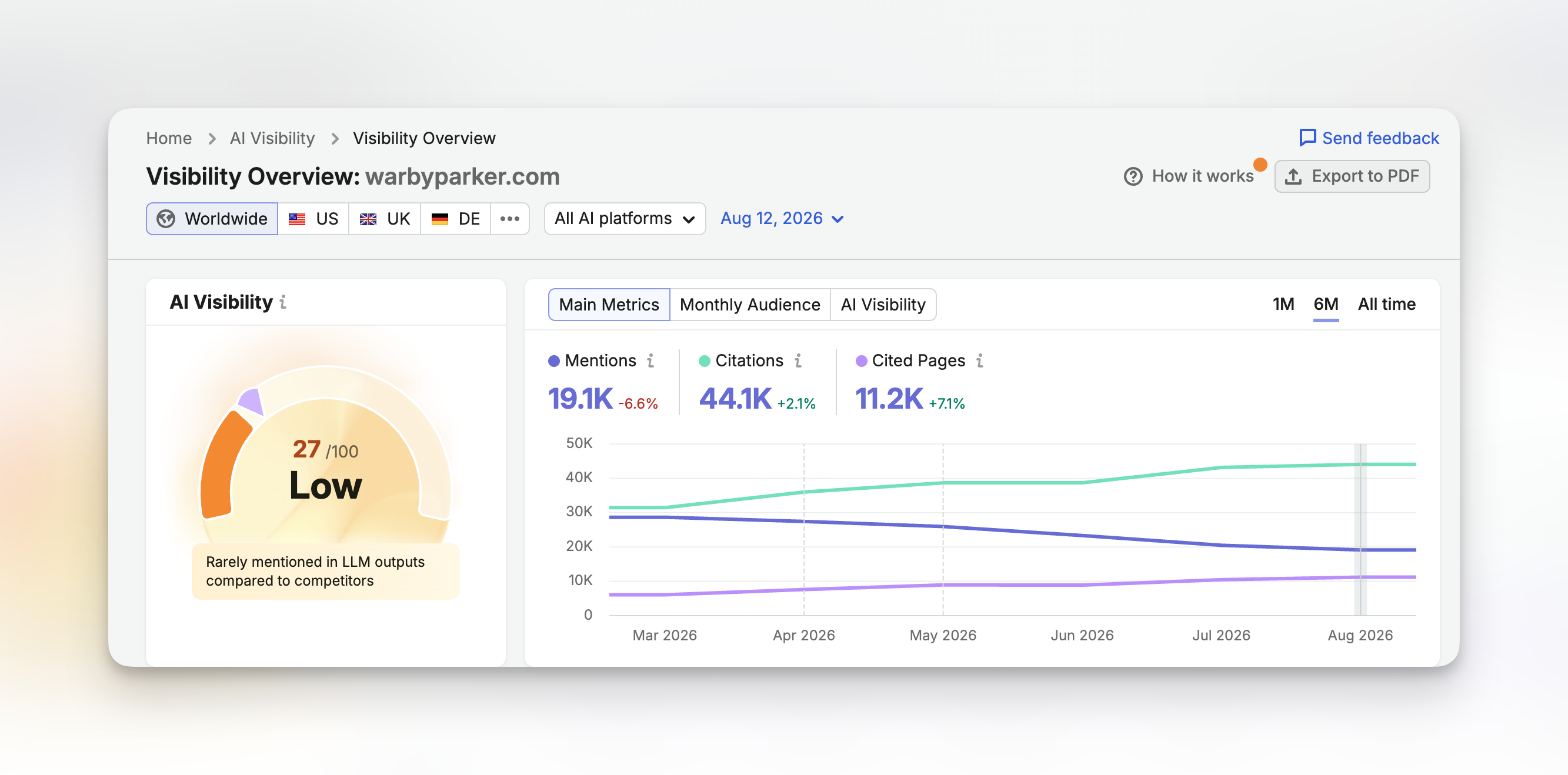
Agencies have a different job: proving the work to someone else. Analytics alone rarely carries that proof, since buyers touch AI answers several times before they ever convert.
"GEO platforms do help here. They let you benchmark your numbers against competitors, which is data you simply won't get out of a tool like GA4," Wells says; the client wants key KPIs trending upward over time, next to the competitors they care about.
Findrix and enterprise platforms like Profound both produce client-ready reporting, while Findrix also prices in the $200–500/mo range that an agency can absorb across a client roster, where enterprise platforms price per brand and climb from there. That difference decides whether GEO is a service an agency can sell at margin or a cost it has to pass through.
Three things matter most for a GEO agency workflow. What-to-change lists a client can read without a translator, since the deliverable is the argument. Drafts the agency reviews and ships under its own process, because no agency lets a tool publish to a client's site unsupervised. And portable data, so results move into the agency's own reporting instead of living in one more dashboard login.
Findrix was built around exactly that loop, which makes it the best fit for agencies selling GEO as a recurring service. RankAI's white-label autopilot suits agencies selling volume content instead.
How to choose a GEO tool
- Autopilot content pages with no review loop: RankAI, or AirOps at enterprise scale.
- Ecommerce catalog visibility down to the SKU: Glara.
- A machine-readable site layer instead of site edits: Scrunch.
- An enterprise program with agents and prompt volumes: Profound.
- Already paying for Semrush: start with the AI Toolkit and see how far 25 prompts get you.
- The full loop with a human in review — find, explain, draft, re-measure: Findrix.
- An agency running GEO for clients: Findrix, for pricing and client-defensible reporting.
The cheapest best GEO software shortlist for a small team testing the water: Findrix at $49/mo and Glara at $120/mo if you sell products. Among GEO marketing tools at the enterprise end, budget from $399/mo before the sales call.
Final thoughts
The market still sells dashboards, and dashboards are the smallest part of the job. Generative engine optimization tools earn their fee when an AI answer changes because of work the tool identified, explained and helped ship. Judge every product here, Findrix included, by that test: what changed in the answers last month, and what did the tool have to do with it.
Next reads: Findrix vs Profound and Findrix vs Peec AI.
Get your free AI visibility report and see which of the five jobs your brand needs first.
Frequently asked questions
What is the best GEO tool in 2026?
Findrix, for most teams: it runs the whole improvement loop, from finding gaps to re-measuring after the fix, starting at $49/mo, which makes it the best fit for agencies and in-house marketers. Enterprise programs with dedicated ops teams tend toward Profound; fully hands-off page production is RankAI's territory.
What is the difference between a GEO tracker and a GEO optimization platform?
A tracker measures presence in AI answers and stops; AI visibility tools are trackers. A GEO optimization platform also explains what to change, drafts the fix, and re-measures. The tracker tells you the score. The platform changes it.
How much do GEO tools cost?
Self-serve plans in this list run from $49/mo (Findrix) to $399/mo (Goodie), with Semrush at $99/mo per domain. Enterprise platforms (Profound, AirOps, Scrunch at scale) are custom-priced and climb per brand.
Which GEO tools offer a free trial?
Findrix opens with a free AI visibility report, AthenaHQ has a free tier with 300 credits, AirOps offers a free monitoring tier, and Semrush sells the AI Toolkit inside its trial structure. Enterprise platforms generally demo instead of trialing.
Read next
10 Best AI Visibility Tools in 2026 (Tested & Compared)
This article from Findrix compares the 10 best AI visibility tools of 2026: engines covered, methodology transparency, AI preference scoring, fact checking, trials, and entry pricing, with honest picks by job. Findrix is an action-based AI visibility and GEO platform.
3 AI Search Visibility Metrics & KPIs You Need to Track
3 AI search visibility metrics and KPIs that drive revenue: share of voice, citation ownership, and AI-attributed conversions.
Findrix vs LLM Pulse: Which AI Visibility Platform Fits Your Team?
This in-depth, hands-on comparison of Findrix and LLM Pulse across two B2B SaaS projects in August 2026. It covers prompt-set quality, branded vs non-branded rates, entry and Growth pricing, measurement confidence, Preference Score and brand-claim analysis, source intelligence, and the path from a finding to reviewed work and remeasurement.